

I am in Italy more than I’m not in Italy, but a region that had particularly been calling me back to spend more time in was Sicily. Luckily, I work from my computer meaning, the world is my office, so I have the great privilege of spending extended periods of time in various locales around the world.
I wanted to do Sicily justice, and having only been to Catania previously, I just had a hunch for Palermo and Western Sicily. So, in March 2026, I spent one entire month in Sicily, and though I got to know the island much better than I had known it before, I realized a month hardly scrapes the surface. Sicily is basically its own country — everything from the language to the atmosphere to the traditions — but above all, and always the most important factor in my book, is the food is vastly different from that of mainland Italy.
I did plenty of field research, and while most of the dishes I tried were typical of western Sicily, a few east coast nods are mixed throughout. So, after one month of spending my way — and therefore eating my way — through Sicily, here’s everything I ate, and what you should try, too.
Palermo
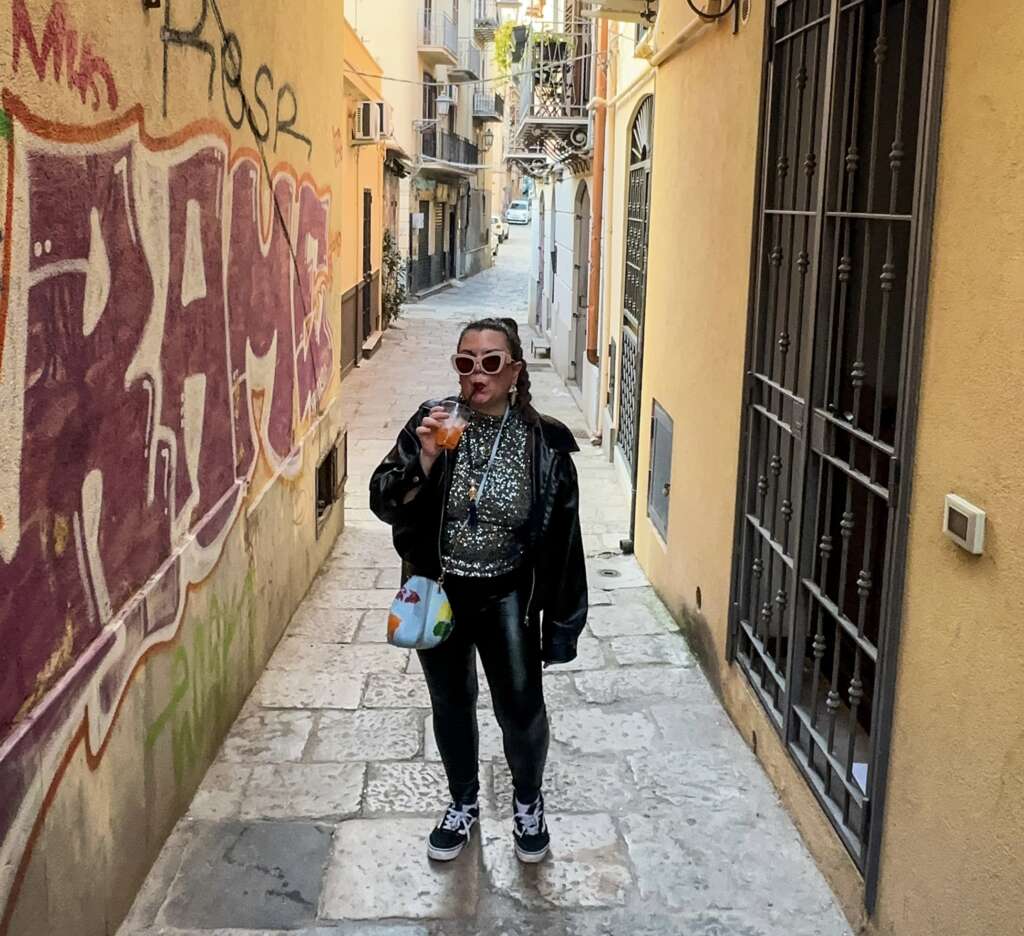
Let’s start with what I ate in Palermo. Palermo is the capital of Sicily, and the chaotic city sees no bounds when it comes to incredible dishes. While you can get a good taste of the city in just one day, I would dedicate at least three days to Palermo. The energy of the city is addicting… and so is the cuisine. Here’s what to try while there.
Pro-tip: Save the hassle and book this street food tour of Palermo instead.
Arancina
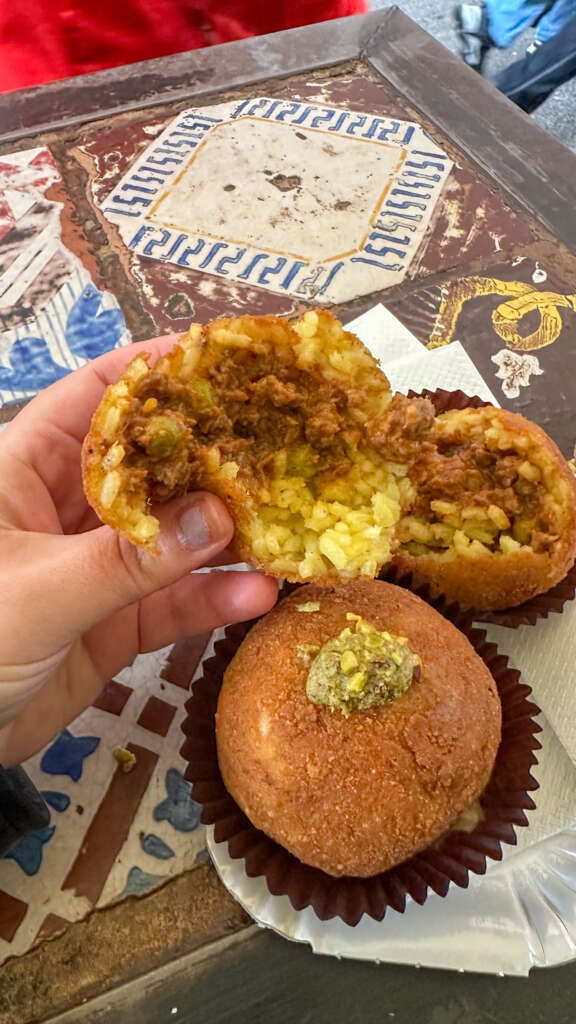
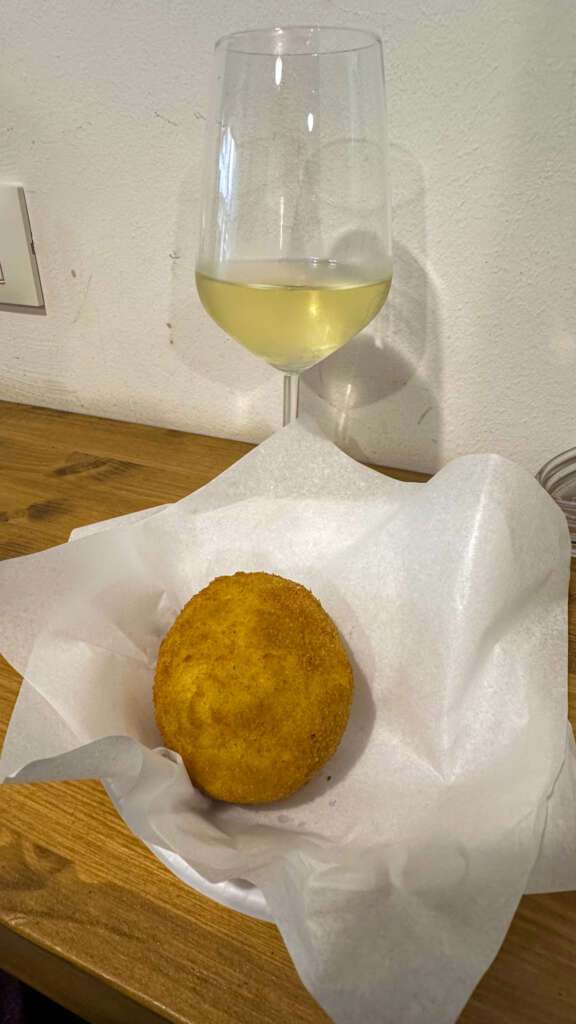
Probably the most quintessential of Sicilian dishes is arancine. BUT…don’t you dare call it anything other than arancina in Palermo. There are some signature differences between west coast arancine and east coast arancini. Singular in Palermo is arancina and plural is arancine, where the fried ball of saffron rice is shaped like an orange, or circular. Common fillings are meat, peas, and mozzarella. In Catania, the singular version is arancino and plural is arancini — where it’s shaped triangular like Mount Etna.
Now, this shouldn’t be a huge deal but to Sicilians — it is. So, as long as you call it the right name based on the city you’re in, locals will love you. Some of my favorite spots to get arancina in Palermo were Bar Al Negretto (get the spicy salsiccia) and Ke Palle (get the pistachio).
Panelle
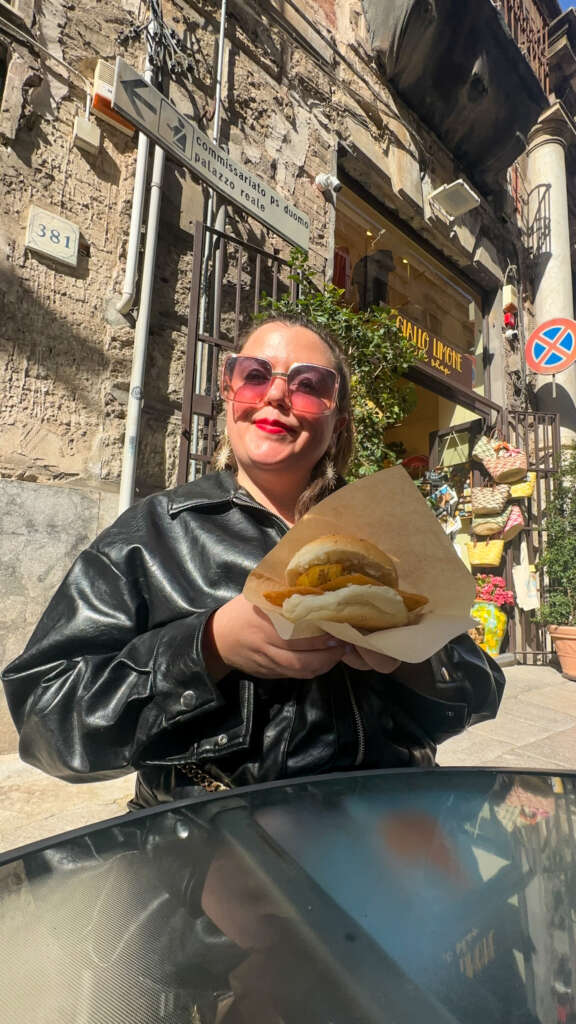
Panelle is simply lightly fried chickpea fritters. It’s a flat, dense pancake-like square made of chickpea flour, often with a squeeze of lemon over it. While you can just eat these on their own, they’re especially ideal sandwiched between bread.
Crocché
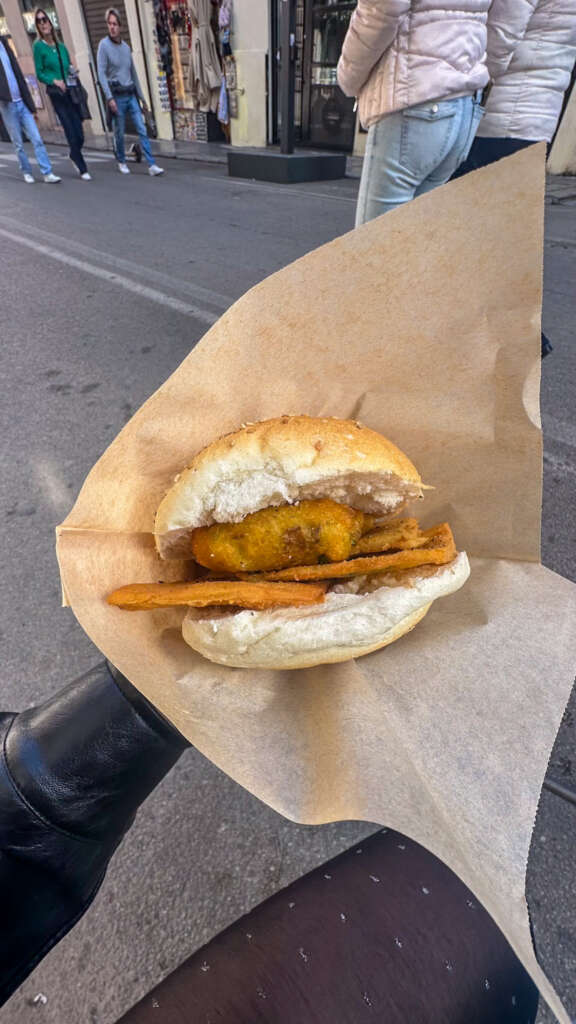
The only thing better than French fries is crocché, the fried “mashed potato” balls, usually mixed with a little bit of herbs and some salt and lemon. Potatoes are a staple in Sicilian cuisine, as is fried food, so crocché just makes sense. Fun fact: there’s a potato restaurant in the city center called Solo Patate. I highly recommend the panelle e crocché sandwich for just 3 euros!
Head to the market with a local for this ultimate Palermo market tour and cooking class.
Melanzana di Parmigiana
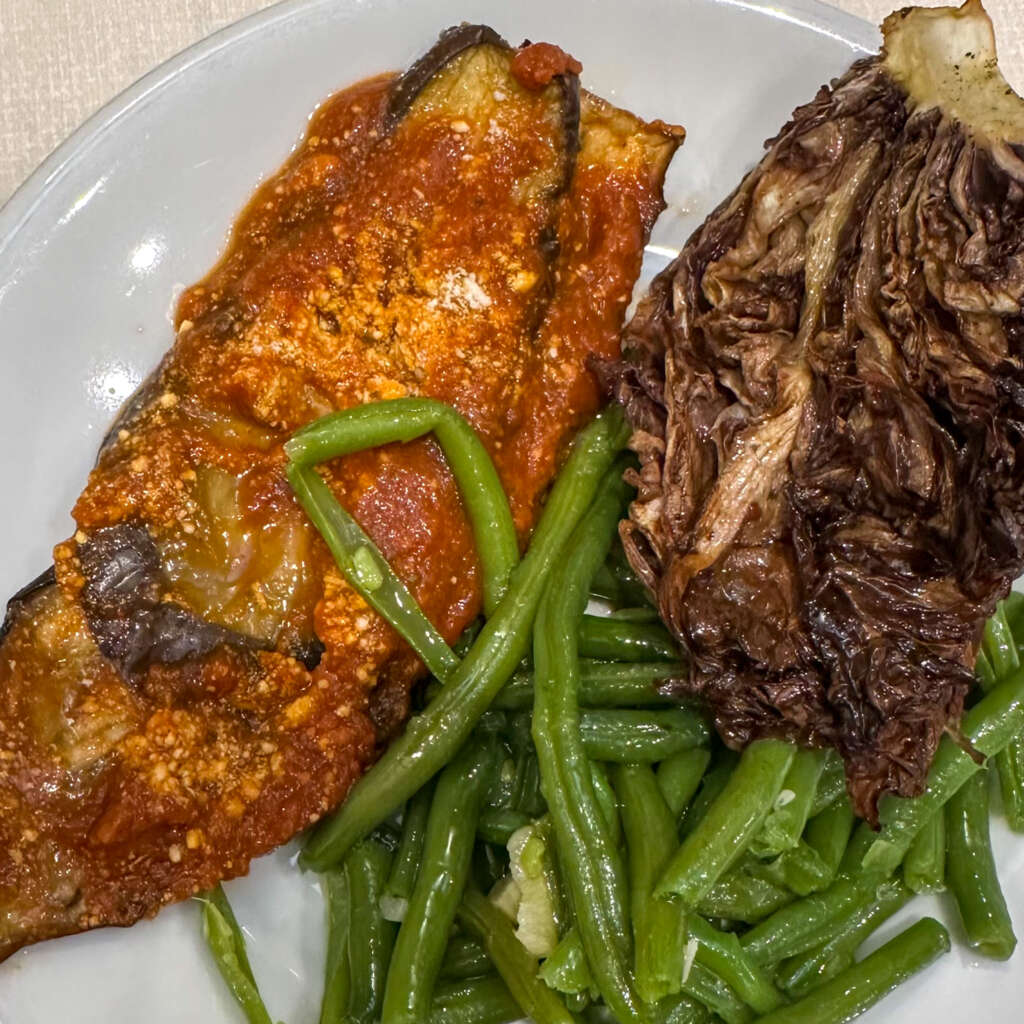
You think you’ve had eggplan tparm — and sure, you have — but you’ve never had real eggplant parm until you’ve had it in Palermo. Melanzana di Parmigiana is the OG eggplant parm, with thinly sliced eggplant stacked between layers of mozzarella and sugo, or tomato sauce. Unlike the breaded deep-fried version in the US, in Sicily, eggplant parm is simply baked.
Cannoli
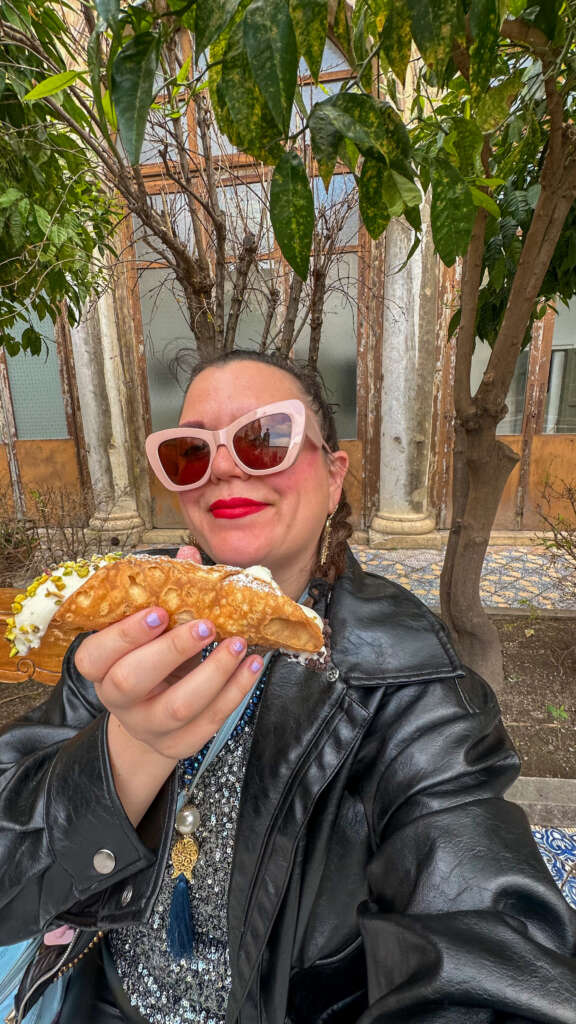
One of Italy’s most iconic desserts didn’t come from the mainland, but instead from the country’s biggest island — cannoli. Cannoli are made of marsala-battered dough, deep fried into a crunchy shell, and stuffed with a sweetened sheep’s milk ricotta. True Sicilian cannoli are often dotted with chocolate chips or pistachios.
No one in the city makes them as good as La Dolceria di Santa Caterina, an old monastery-turned-bakery where recipes have been passed down through generations.
Cassatella di’Sant Agata
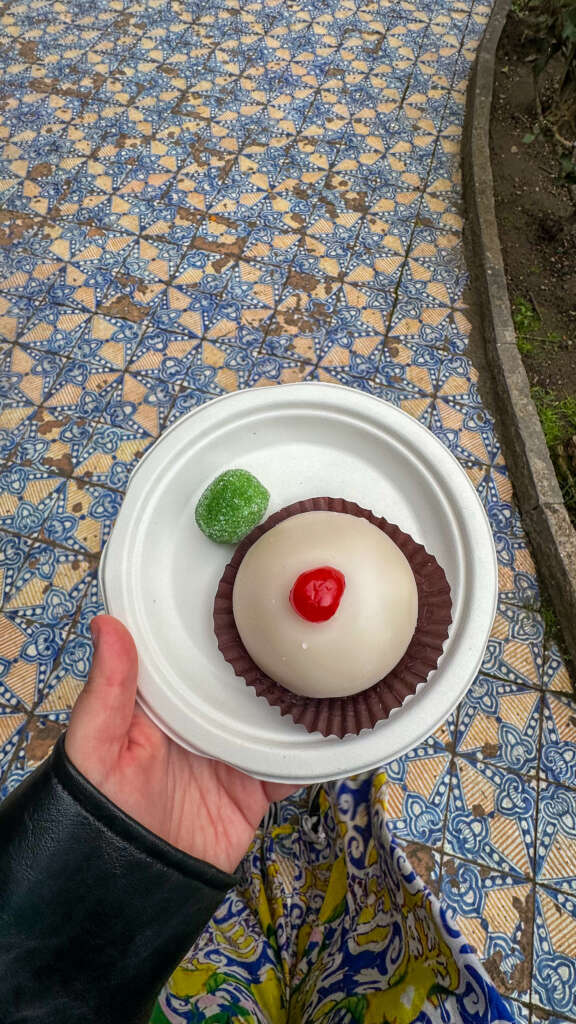
The shape of cassatalla di’Sant Agata might look … awfully peculiar, and there is a very good reason for that. While this is technically a dish from Catania, if you’re going to stop by La Dolceria di Santa Caterina, you simply must try one of these funny-looking pastries.
Saint Agata was a martyr who was imprisoned for refusing to marry a Roman. She was sent to prison, where they used pinchers to cut off her breasts, and she eventually died from the torture. Now, this pastry is made to honor her, and she even has a dedicated Saint Agatha’s Day every February 5th, which is widely celebrated in Catania.
Olive di Sant’ Agata
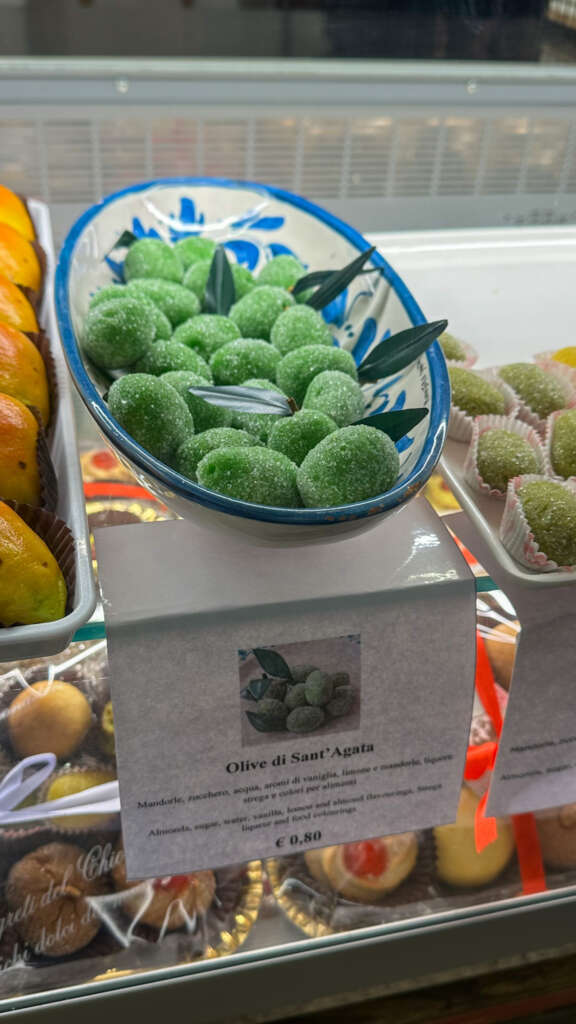
Speaking of Saint Agatha, at the same bakery, La Dolceria di Santa Caterina, you can try olive di’Sant Agatha (pronounced AH-lee-vay). These are simply little marzipan “olives.” The legend is that when Saint Agatha was in prison, the only thing she was able to eat were olives because of a reachable olive branch.
Torta setteveli
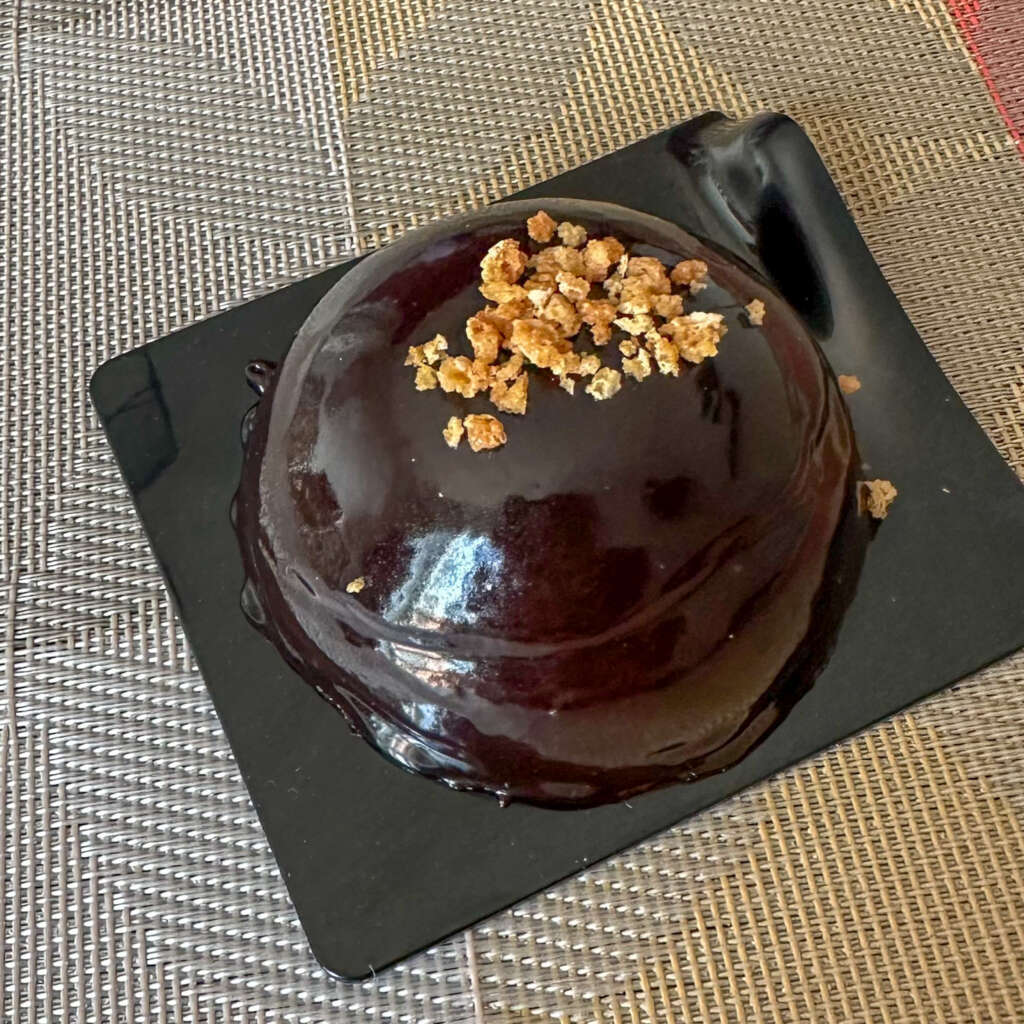
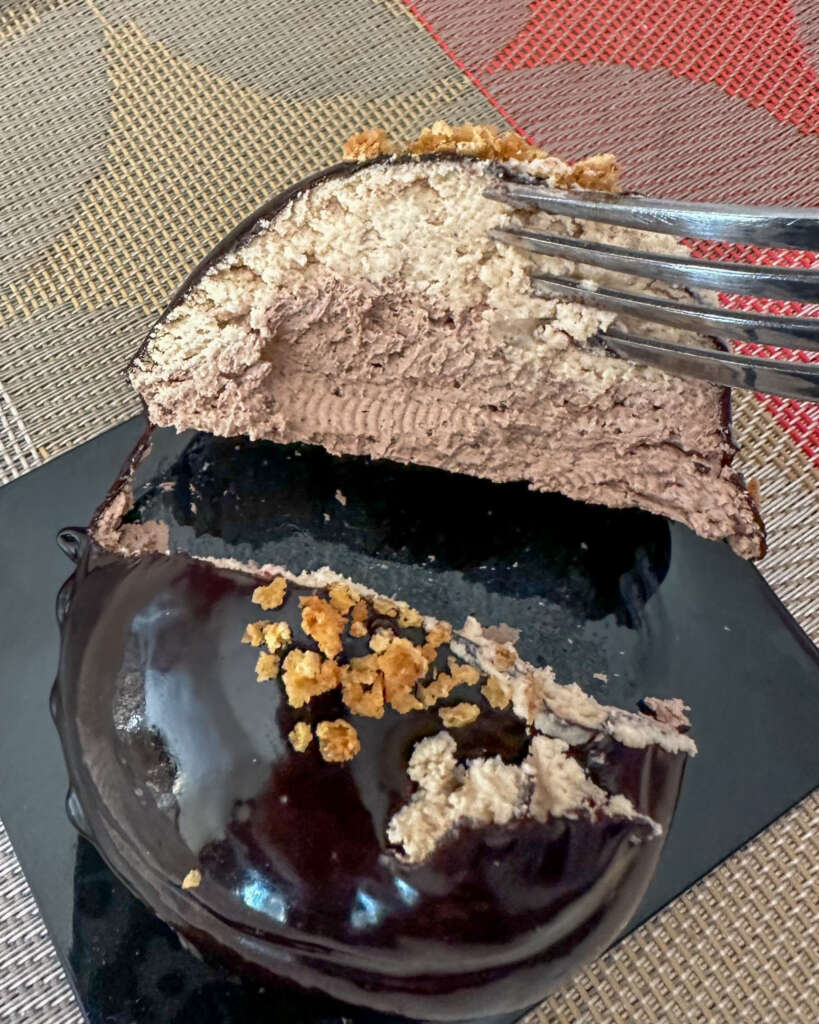
Torta setteveli, which translates to “seven veils cake,” originated in Palermo and can be commonly found in bakeries around the city. It’s made with varying layers of chocolate and hazelnuts, in cream and jelly form. It has a peculiar consistency and should be served cold. To me, it is a bit on the sweet side, but it’s so uniquely Palermitan that I still stand by trying it when in town.
Iris
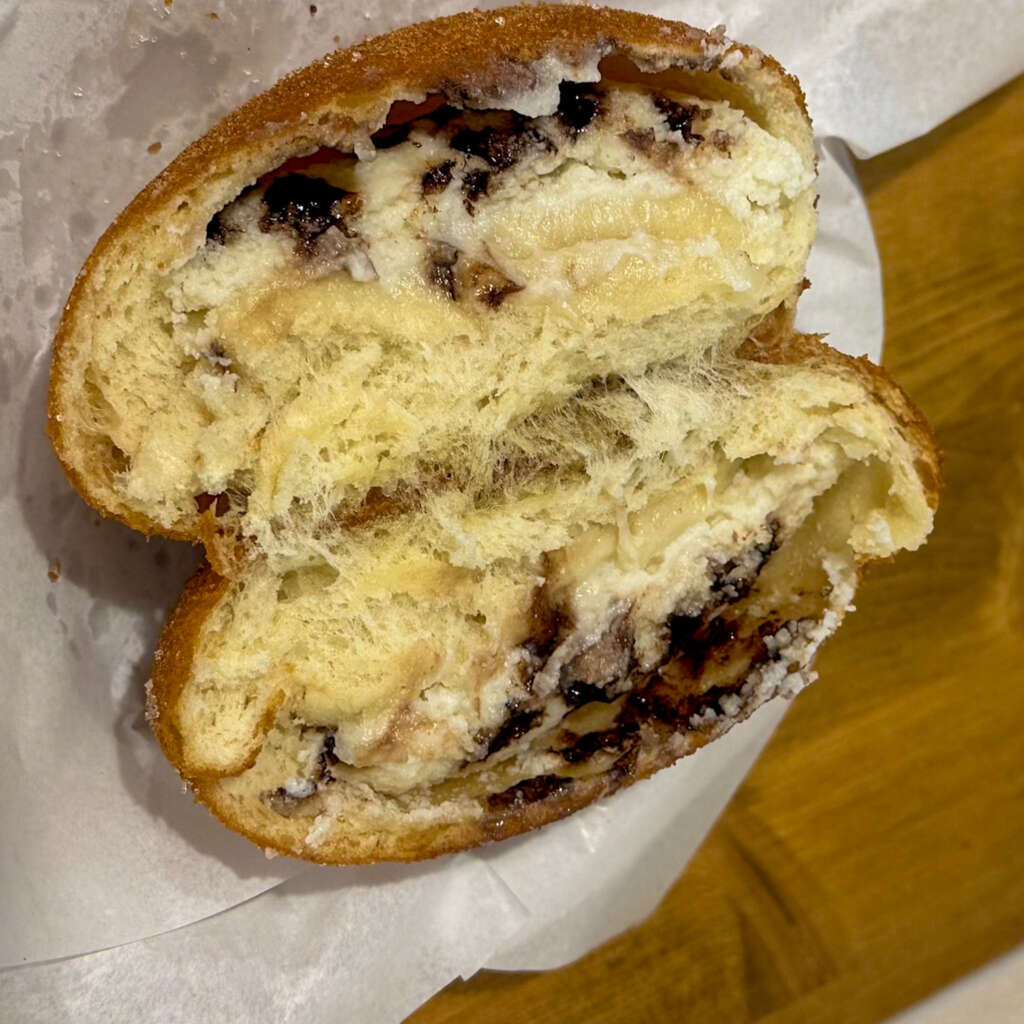
If a bombolone and a cannolo had a baby, I think we can all agree that it would be magical, right? Well, we don’t have to envision it, because that’s what Iris is. Oh, my beloved iris — I tried my first one at a small tavola calda on one of my first few days in the city. The woman working only spoke Italian (well, Sicilian), and kept saying, “iris” — pronounced EE-ris, with a soft r. I was thinking I misheard her, but alas, I did not.
Iris is a deep fried doughnut stuffed with a sweetened ricotta cream, filled with chocolate chips. Yes, this is a blog, but no, I have no words. Please try this for a life-changing bite.
Sfincione
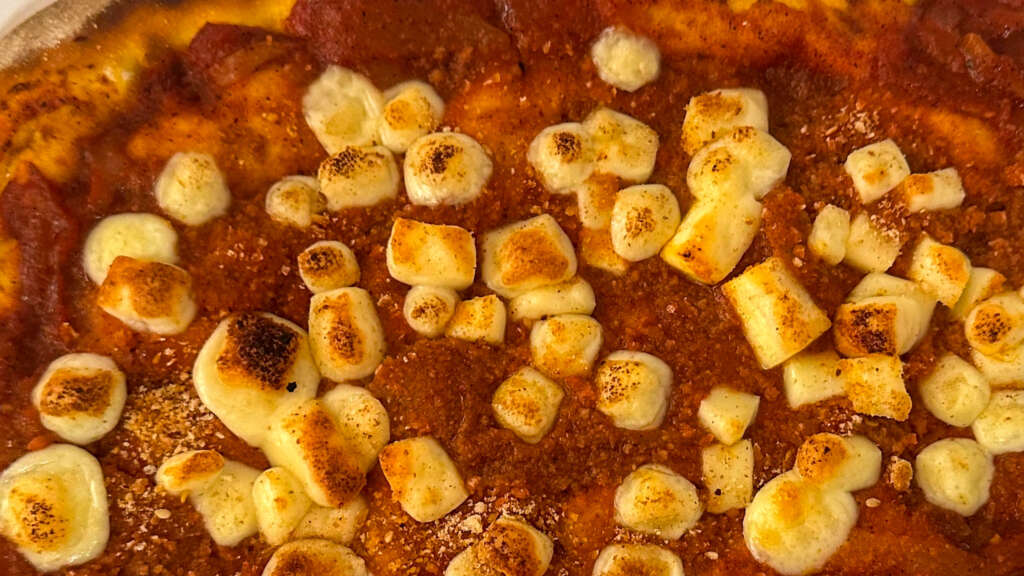
What’s a real trip to Italy without some pizza? Sfincione is the classic pizza of Palermo. It’s made with a thick crust that falls somewhere between dense and chewy. It’s made with a red sauce that’s been cooked down creating a deep tomato flavor, where the umami is further amplified with onions and anchovies. It’s then dotted with specks of smoked caciocavallo cheese and often topped with breadcrumbs.
Anelletti al forno
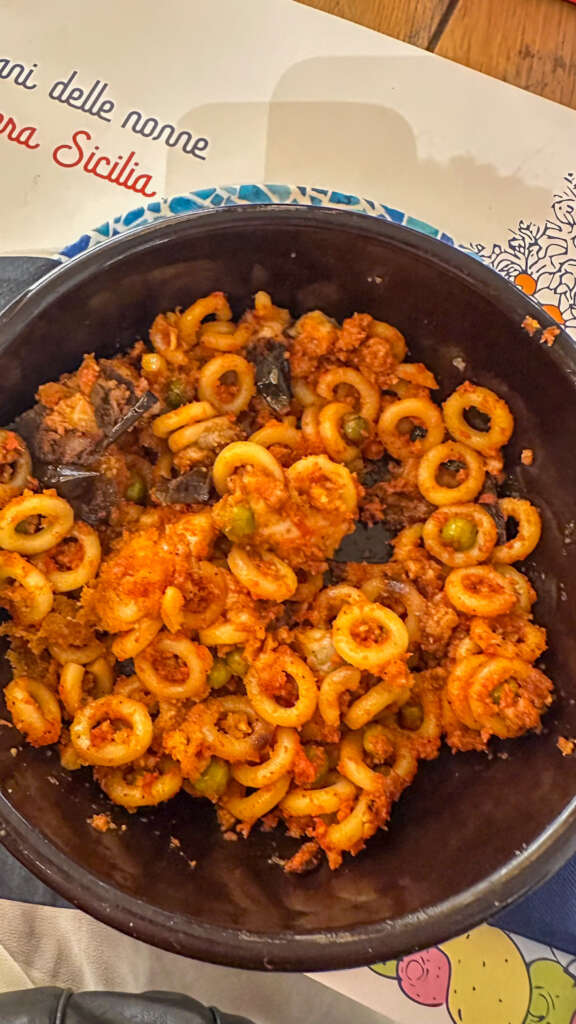
Did you know the OG Spaghetti O’s come from Sicily? Sicilians would probably not love me using that as point of reference, but it certainly is a good way to remember that you’ve got to try anelletti al forno when in Palermo. Anelletti is the mini ring pasta shape, and in Sicily, they’re baked with a rich tomato and meat sauce, often with peas, which often creates a nice crackling crust on top, like the crunchy bits from lasagne. It’s a simple dish that was one of my favorites I had when in town.
Love pasta as much as I do? Book this pasta and tiramisu class with non-stop flowing wine.
Involtini di pesce spada
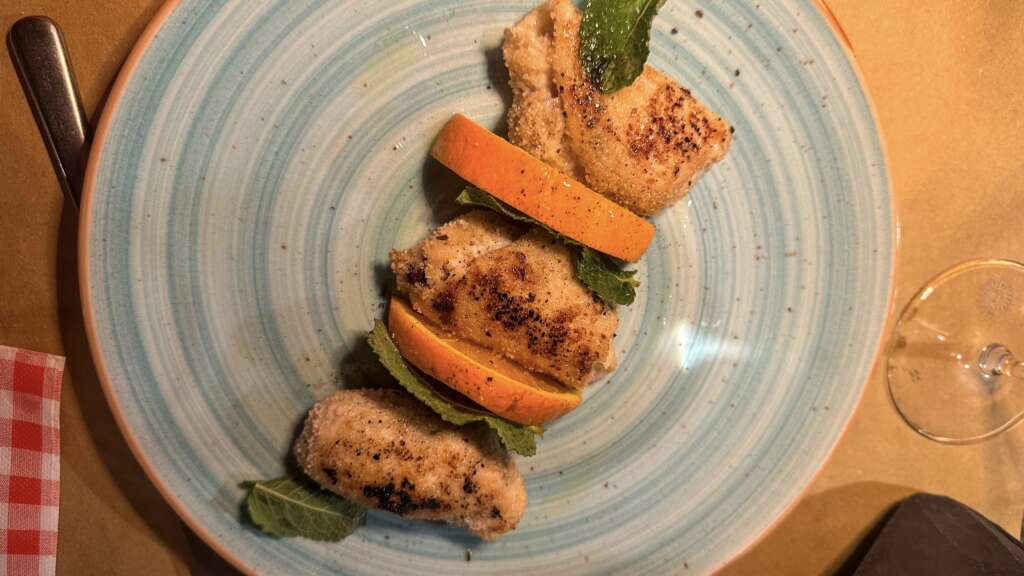
It would be hard to put my finger on what was the best bite of the trip, but if I really had to choose one, it would be the involtini di pesce spada from Taverna Calderai. The restaurant is on the newer side but feels old school in so many ways, with handwritten menus, dark wood accents, and a simple, traditional menu that changes nightly. I had already been in Palermo for about three weeks when I finally made my way here, so I had worked my way through all of the classic dishes. This led to involtini di pesce spada, or rolled swordfish rolls. At Taverna Calderai, they were served with mint and orange and a light coating of breadcrumbs. The fish was extremely tender, and I especially loved this restaurant because it’s one of the few spots in Italy you can actually sit at a bar, which is always a nice option for solo travelers.
Pasta con pesce spada
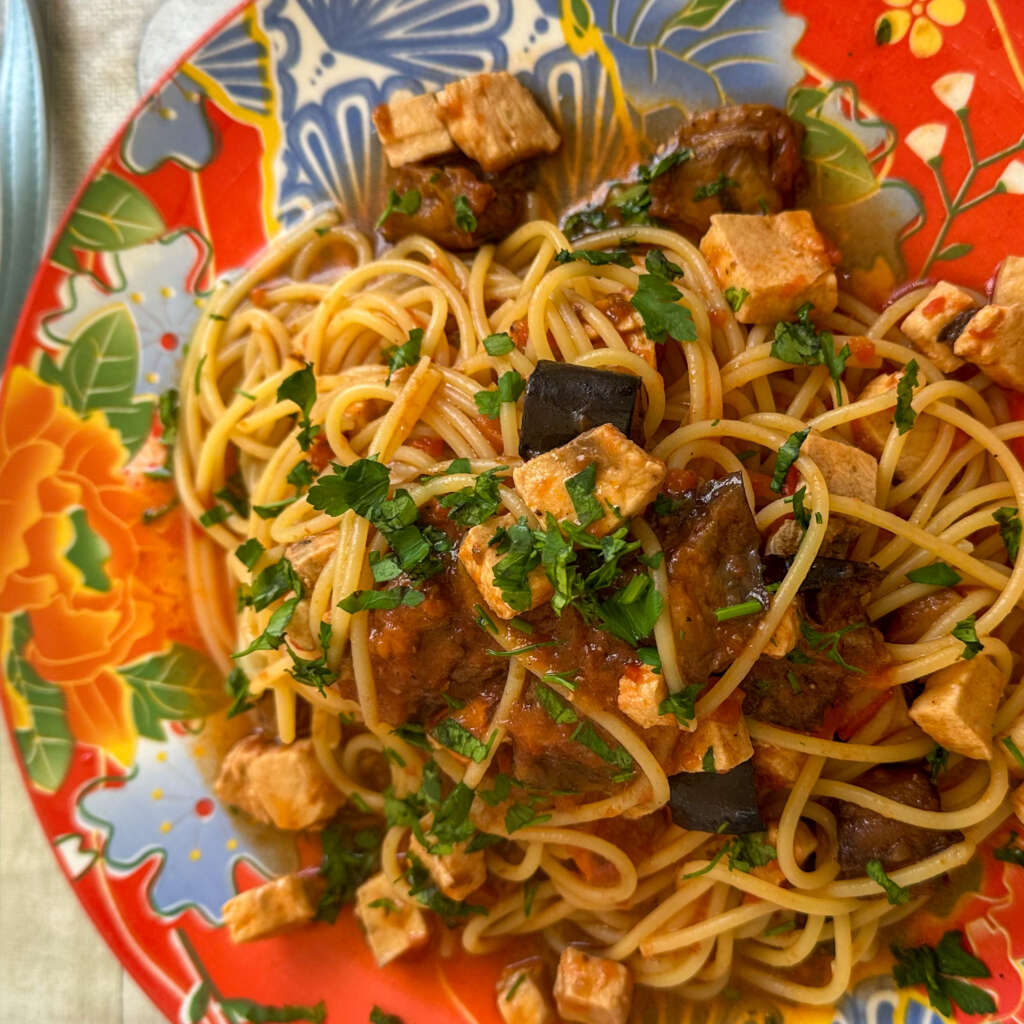
After trying my delicious involtini di pesce spada, I was on the hunt for more swordfish (no pun intended). Right outside of Mercato Ballaro, one of the most famed places to try street food in Palermo, was Trattoria Calessino, a restaurant that had been recommended to me by someone who grew up in Palermo. This humble eatery offered massive plates of pasta con pesce spada, or pasta with swordfish (and cubed eggplant) for just 8 euros. The portion was absolutely outstanding and the food itself was a home run. This was one of my last meals in Palermo and eating a giant plate of seafood spaghetti while sitting outside of a market on a tiny plastic chair felt like the perfect way to round out my time in the city.
Calamari fritti
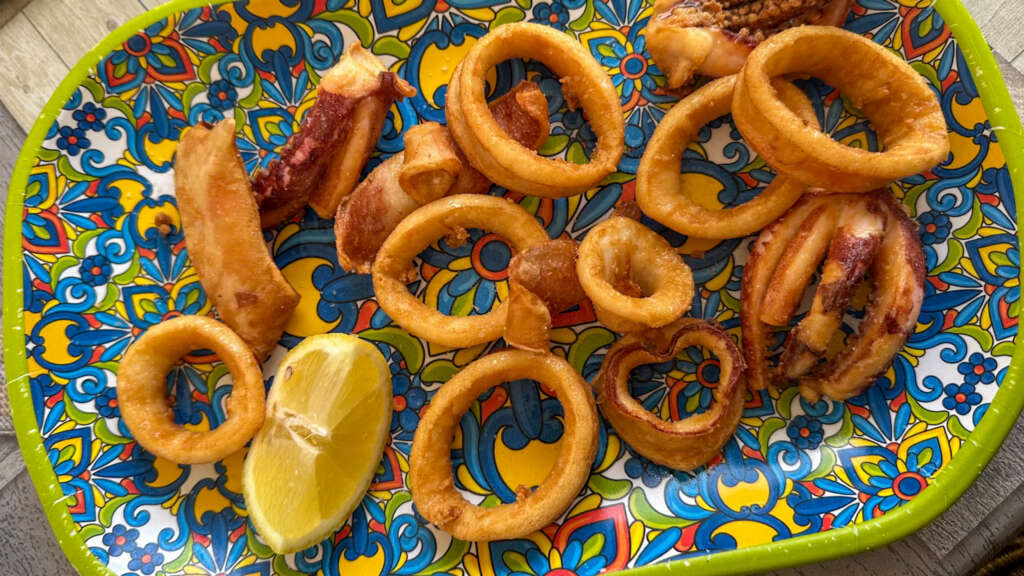
At Trattoria Calessino, the same restaurant I tried pasta con pesce spada, I tried calamari fritti. I’ve had fried calamari many times throughout my life, but never quite like I had it in Sicily. Here, the breading was so light that it was hardly there, with just a thin coating of flour around rings of calamari. Sprinkled with flakey sea salt and just a squeeze of lemon, the calamari fritti here was simple perfection.
Pasta con sparacelli
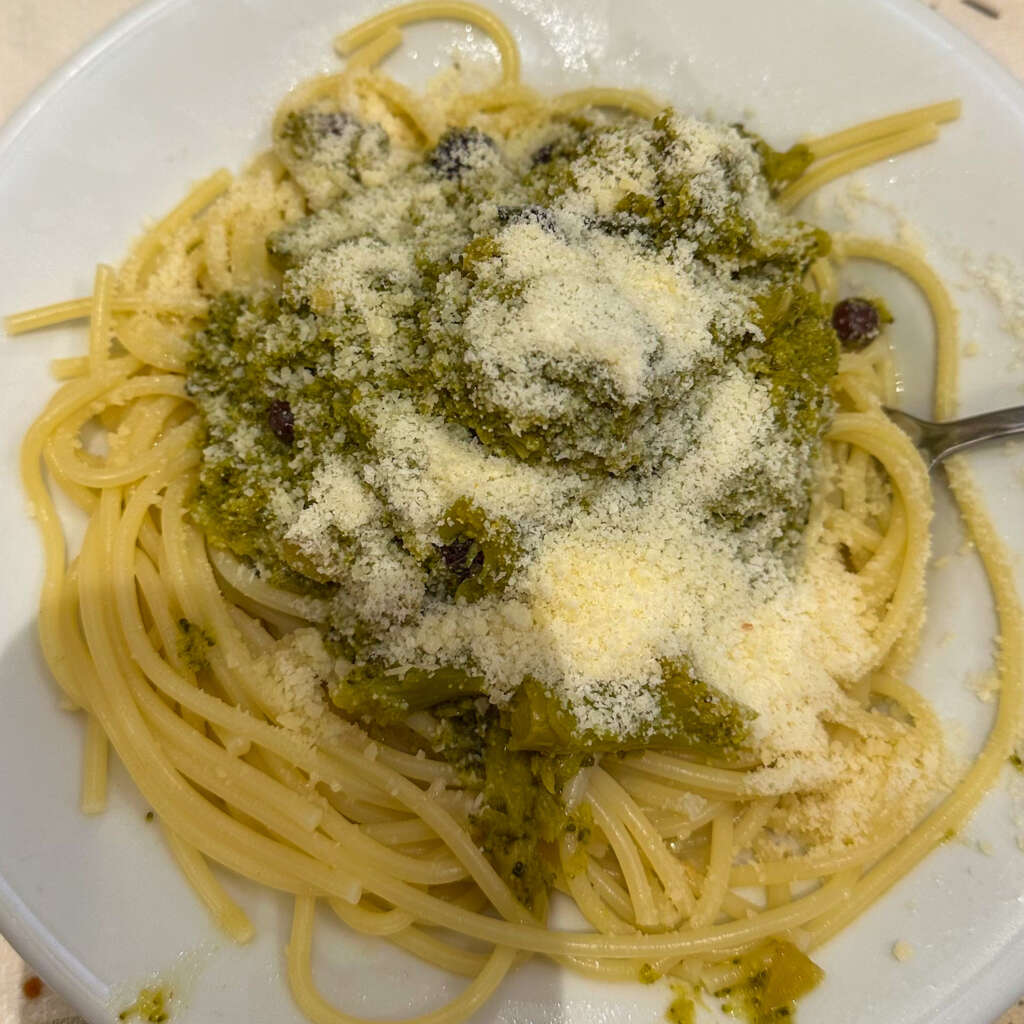
If you have a chance to visit a Tavola Calda while in Palermo, do yourself a favor and go. One of my favorites was Basile Focacceria del Massimo, located right around the corner from Teatro Massimo. While there, they offered a special of pasta con sparacelli, a lesser-known Sicilian dish made of blended broccoli and anchovies. When in Rome, as they say. While this was not my favorite dish I had in Palermo, the portion was massive and was less than 5 euros. And what better way to get your veggies in than by being blended into a pasta sauce?
Sicilian salad
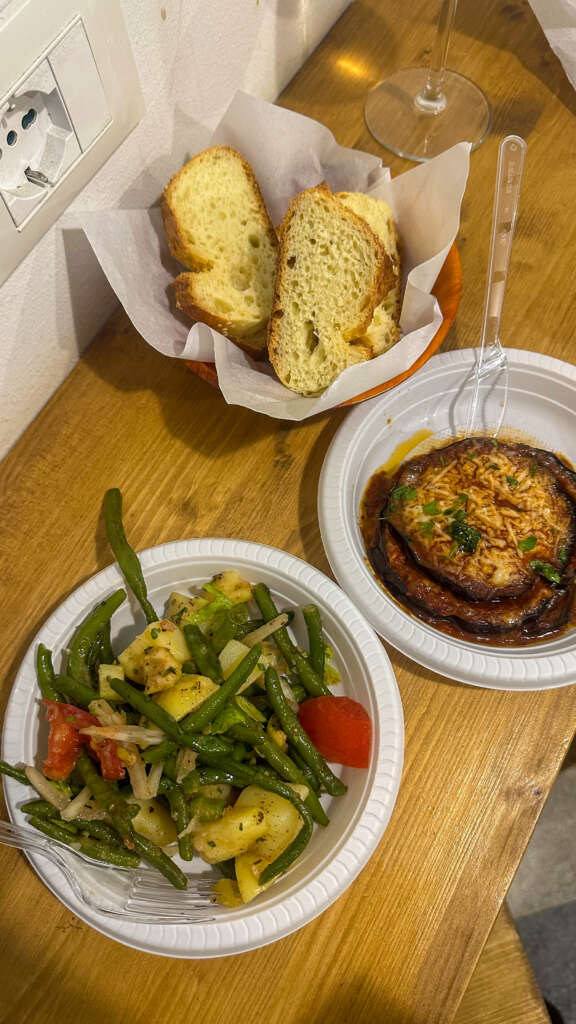
Despite my deep love for caloric foods, I love a good salad — and a typical Sicilian salad is one I can stand behind. Sicilian food has tons of vegetables incorporated throughout, and the best way to get a bunch of them in at once is by eating a typical Sicilian salad. This is a dish simply made of green beans, potatoes, olives, onions, and tomatoes, tossed in a light olive oil with some salt and pepper.
Bucatini con le sarde
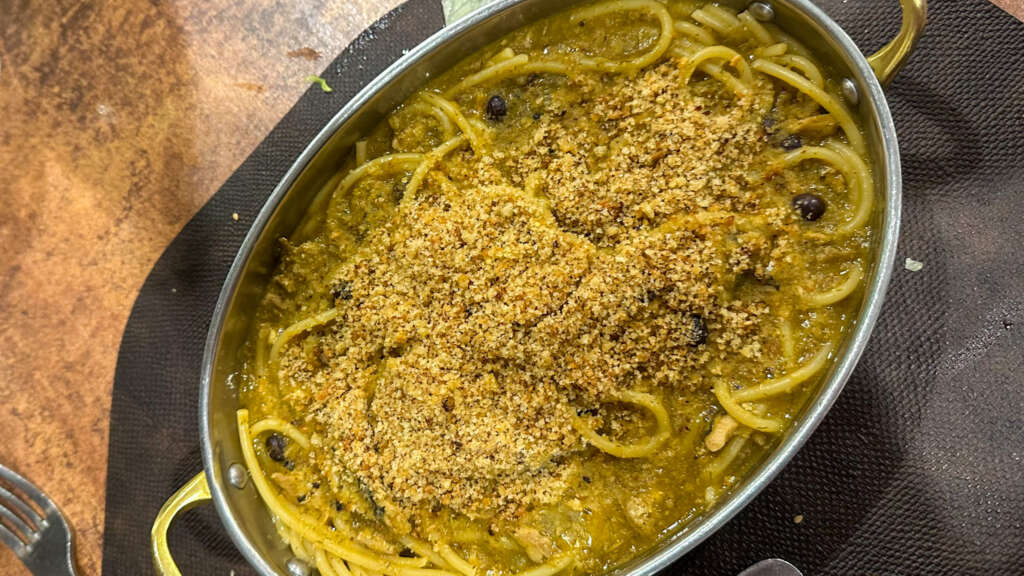
I first tried bucatini con le sarde at the oldest Sicilian restaurant in New York City (RIP Ferdinando’s Focacceria). I was skeptical — the dish was made with bucatini, sardines, fennel, raisins, and even a little bit of orange zest. In what world does this make sense? In Palermo; that’s where! Bucatini con le sarde is a uniquely Sicilian dish, one that you shouldn’t knock until you try. Pro-tip: it’s even better with a hefty dusting of toasted breadcrumbs.
Pasta alla norma
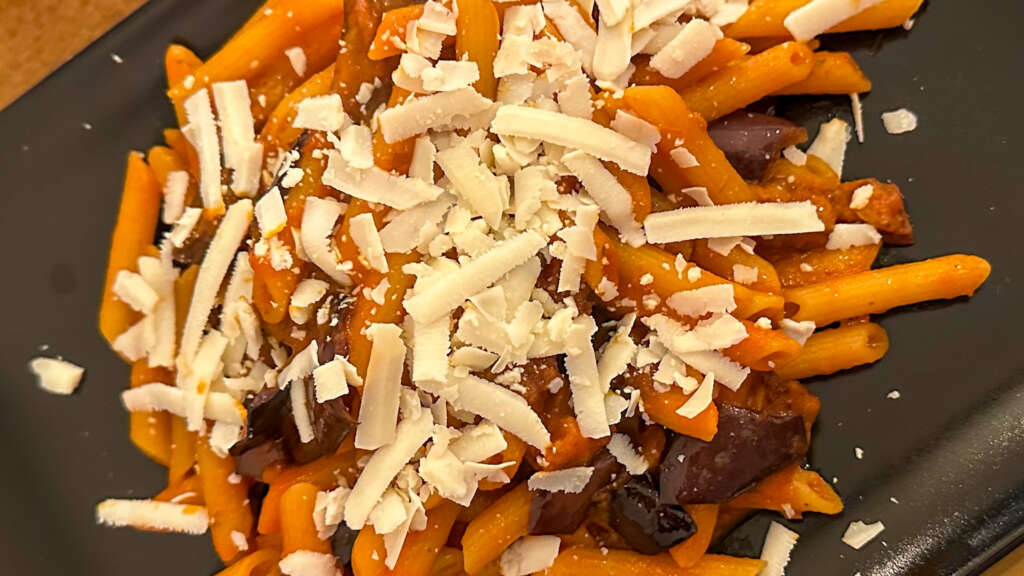
More typical of Catania is pasta alla norma, a simple pasta dish (usually penne) with chunks of slow-roasted eggplant, topped with shaved ricotta salata. It’s salty from the cheese, slightly sweet from the eggplant, and a filling dish with humble ingredients.
Pistachio gelato
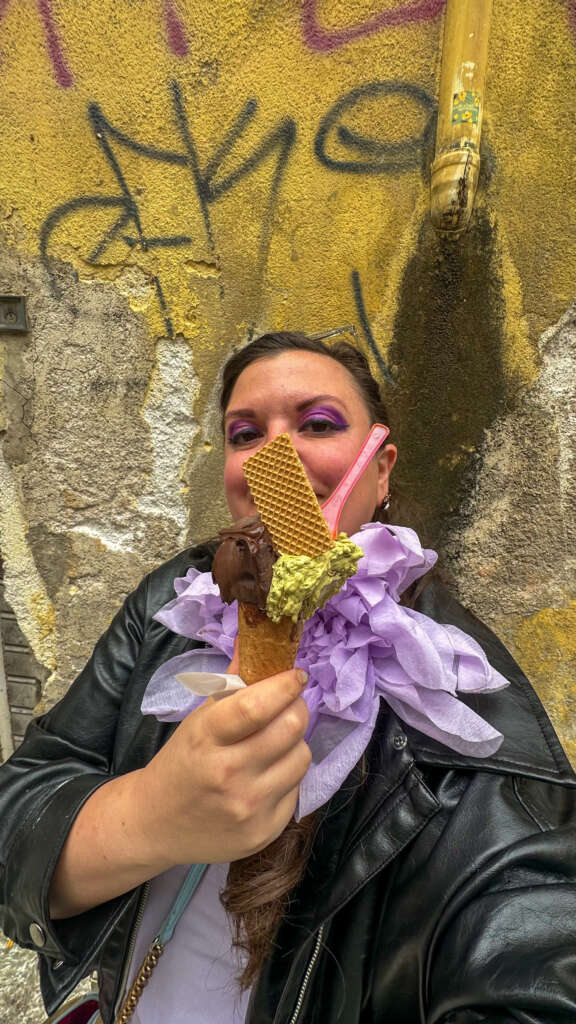
Gelato is popular all around Italy, of course, but when in Sicily, you must try pistachio gelato. Pistachios are abundant in Sicily (especially in Bronte), and after eating a lot of pistachio dishes, I can confirm they’re just made different here. My favorite gelateria in Palermo was Dolce Capo which is open quite late every night (on Saturdays, until 2:30 a.m.!). They have a wide range of other flavors but you can’t go wrong with the pistachio and fondente pairing.
Finish your time in Palermo with some wine with this wine and Sicilian tapas tour.
Trapani
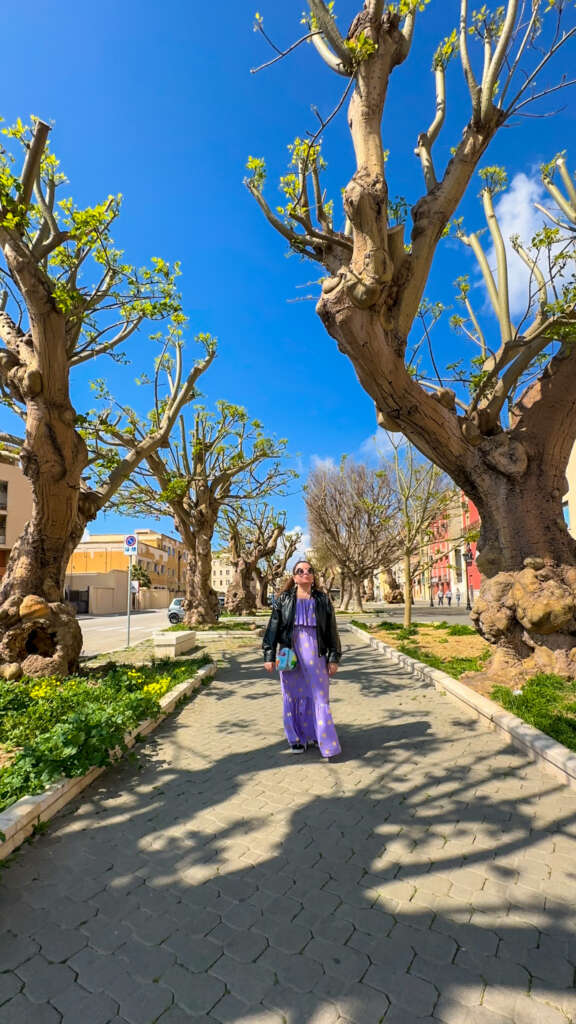
Located on Sicily’s proper west coast, Trapani is a seaside town with cuisine so vastly different from Palermo that you wouldn’t even know you’re on the same island. I headed to Trapani after Palermo and felt like I was continuing to learn something new every single day, simply by what was on my plate. After one week in Trapani, including a day trip out to Favignana, here’s everything I ate.
Busiate Pasta
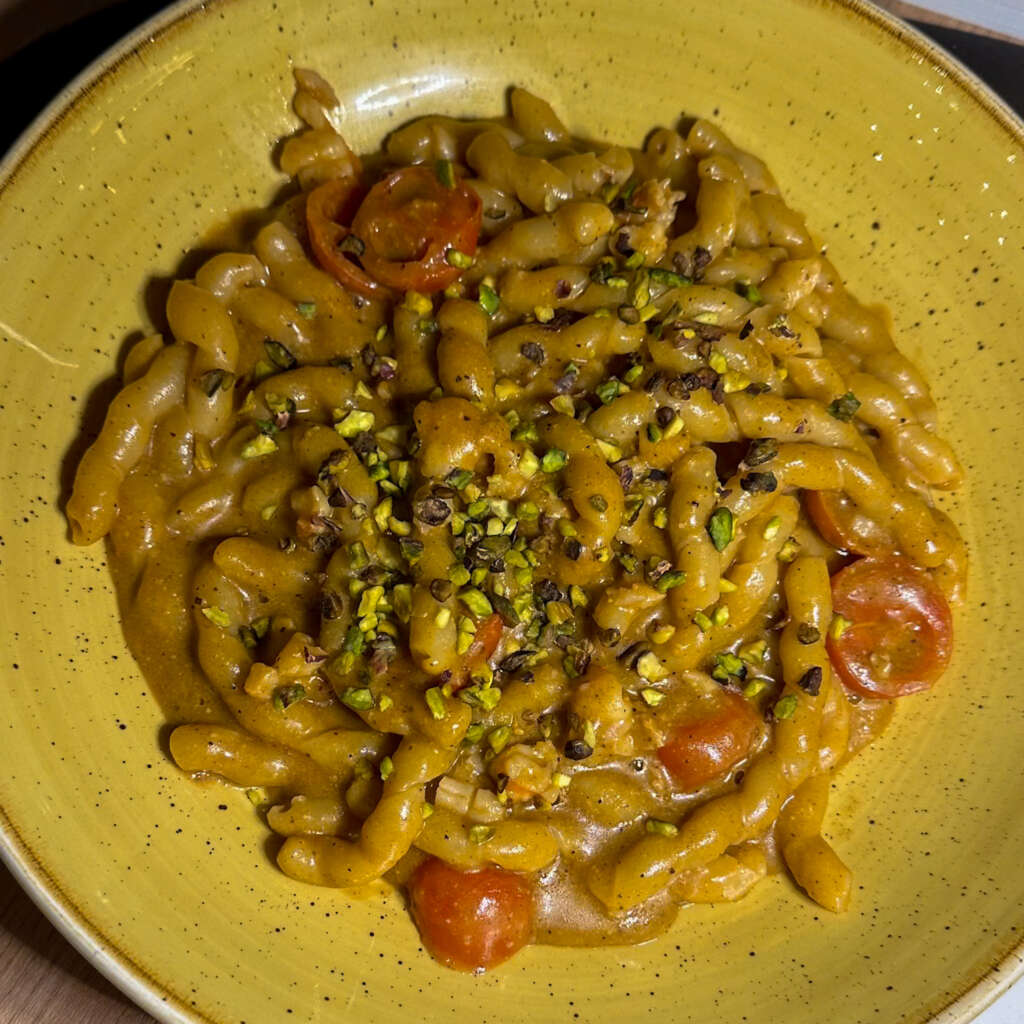
Not that you’d ever want to compare pasta with hair, but if a curled ringlet of hair was a pasta shape, it would be busiate. It’s the most typical pasta found in Trapani and is most commonly served with pesto alla Trapanese. Oh, speaking of which…
Pesto alla Trapanese
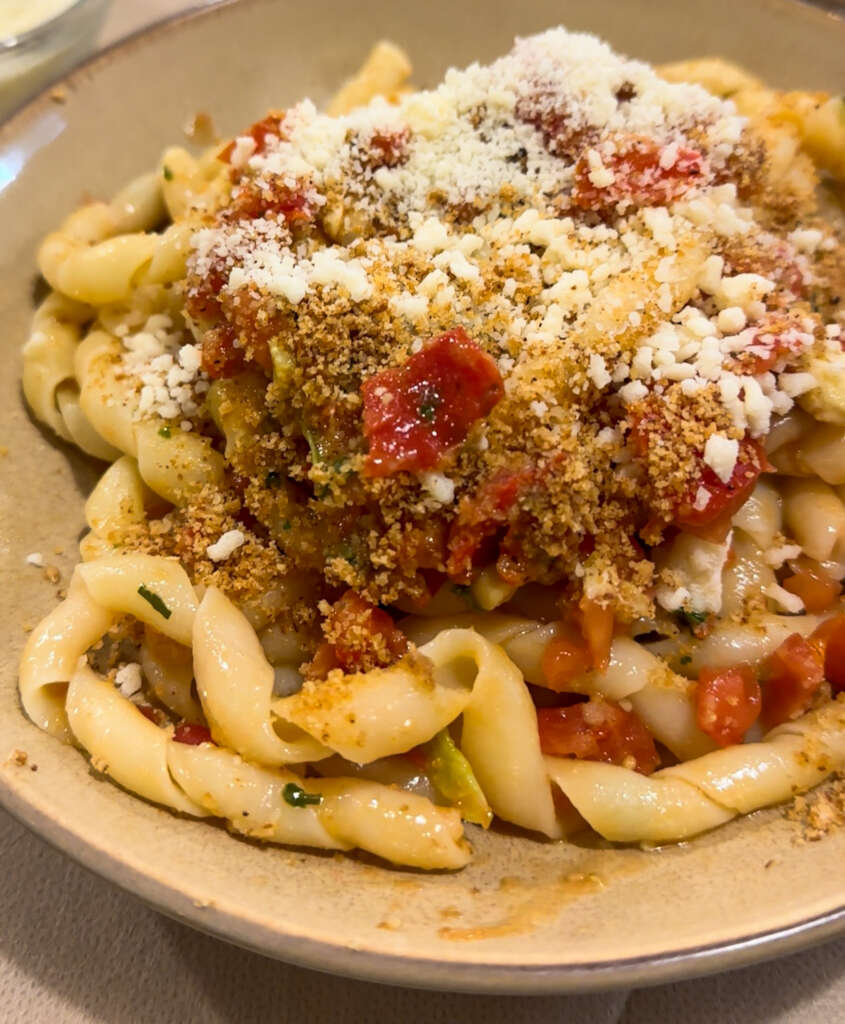
Pesto alla Trapanese is the main pasta “sauce” in Trapani. It’s a raw pesto made of almonds and tomatoes muddled together. It’s naturally vegan, though I could often be found dumping a whole lot of Pecorino on mine.
Rianata Trapanese
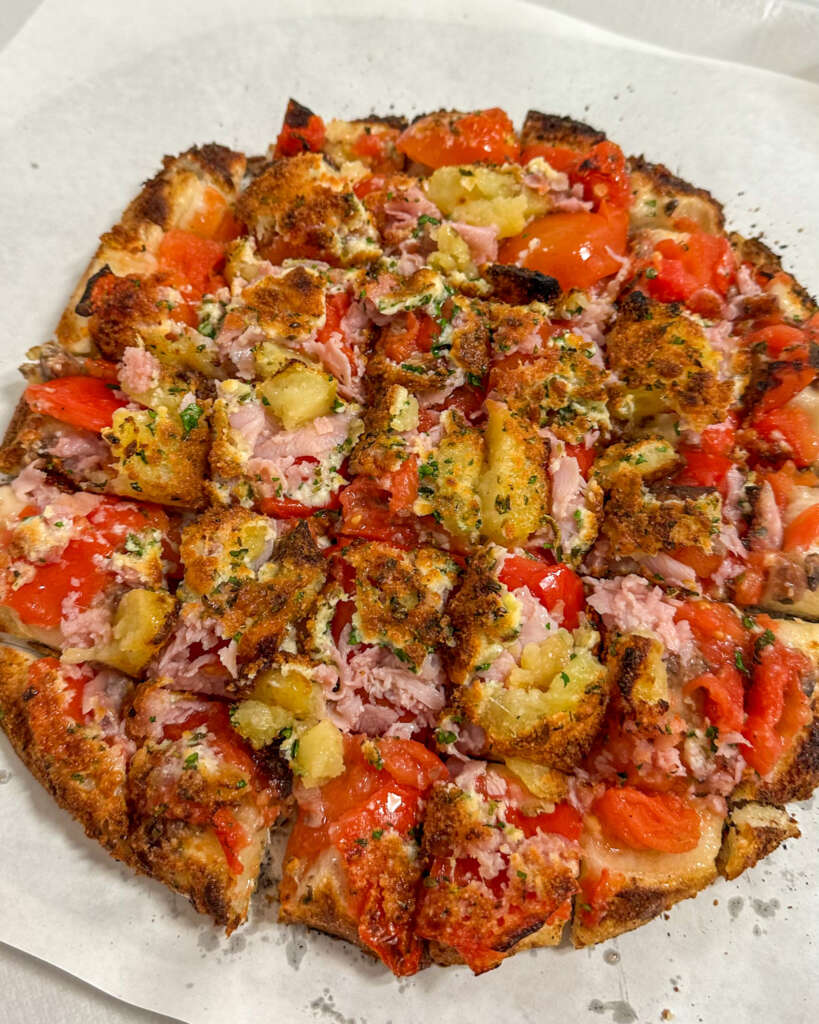
Sfincione is to Palermo what Rianata is to Trapani. And if you’ve read this far, you know sfinicione is pizza! Rianata Trapanese is a light, focaccia-like dough, topped with a sauce made of fresh tomatoes, oregano, onions, and anchovies. At Antica Pizzeria Da Calvino, you’ll get the best one in town. This pizzeria used to be an old brothel and now makes incredible ‘za — I got mine topped with ham and potatoes, as per the server’s recommendations, and the portion size was massive, as it so typically is. This was by far my favorite pizza I had in Sicily, and in the top 5 favorites I’ve had in the country.
Cassatelle
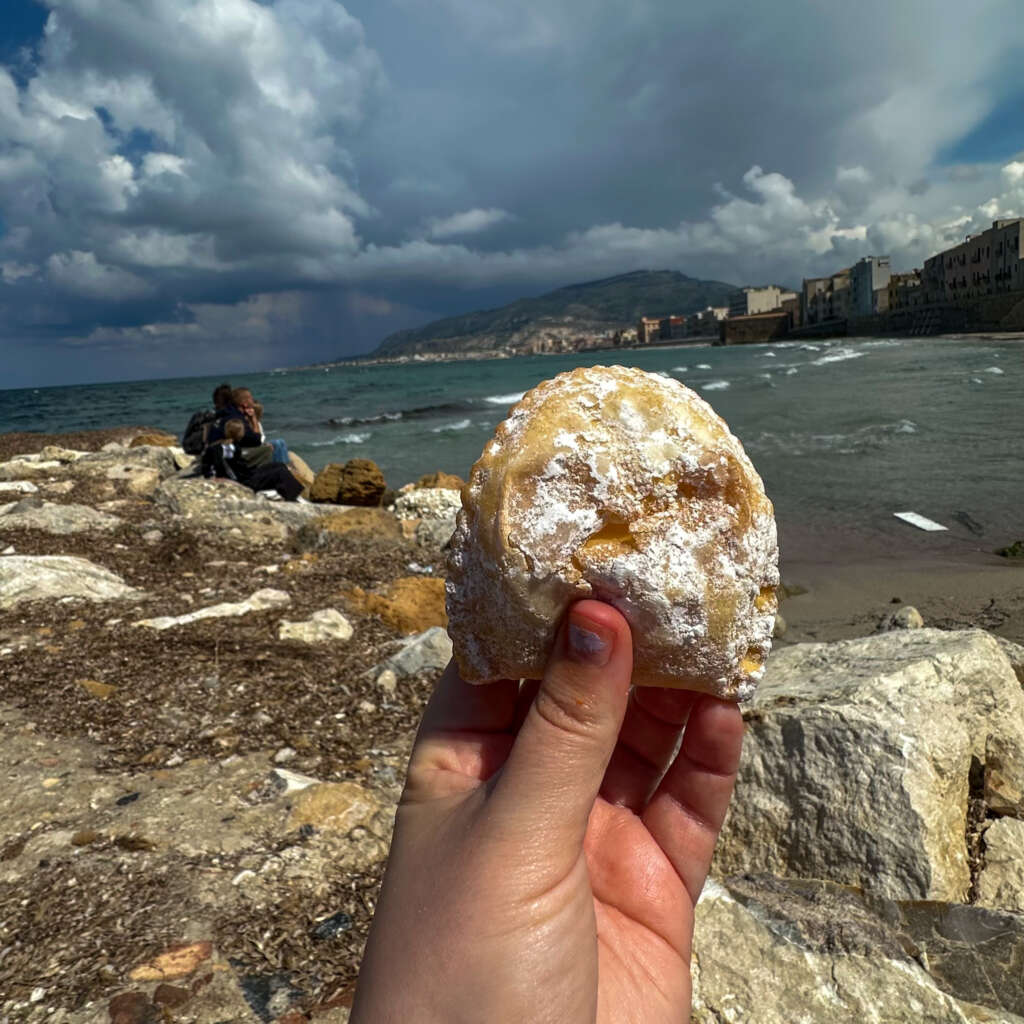
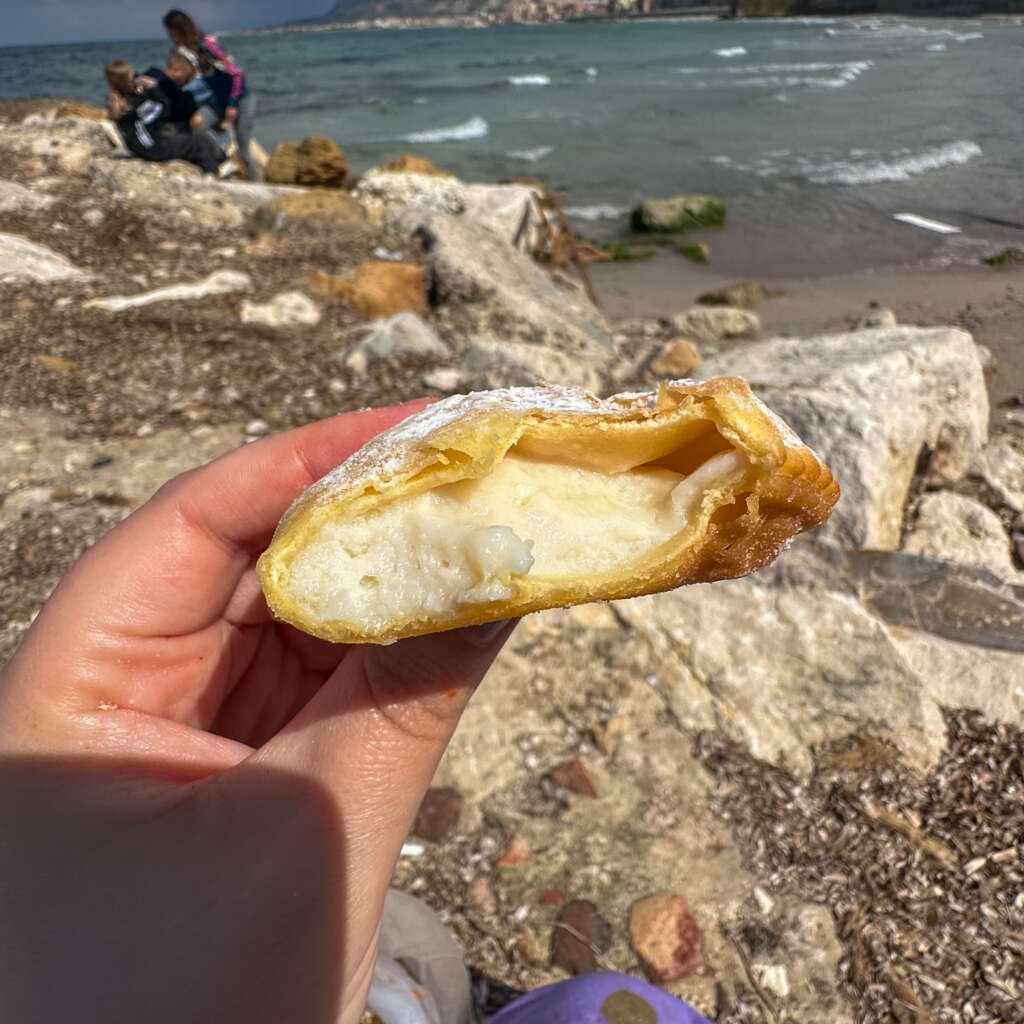
You’ll see “cassata” type of desserts all over Sicily, but in Trapani, Cassatelle refers to a deep fried “ravioli” stuffed with sweetened ricotta and chocolate chips. Panificio Oddo Michele makes them and is popular with locals. Just grab a ticket and wait for your number to be called.
Timballo
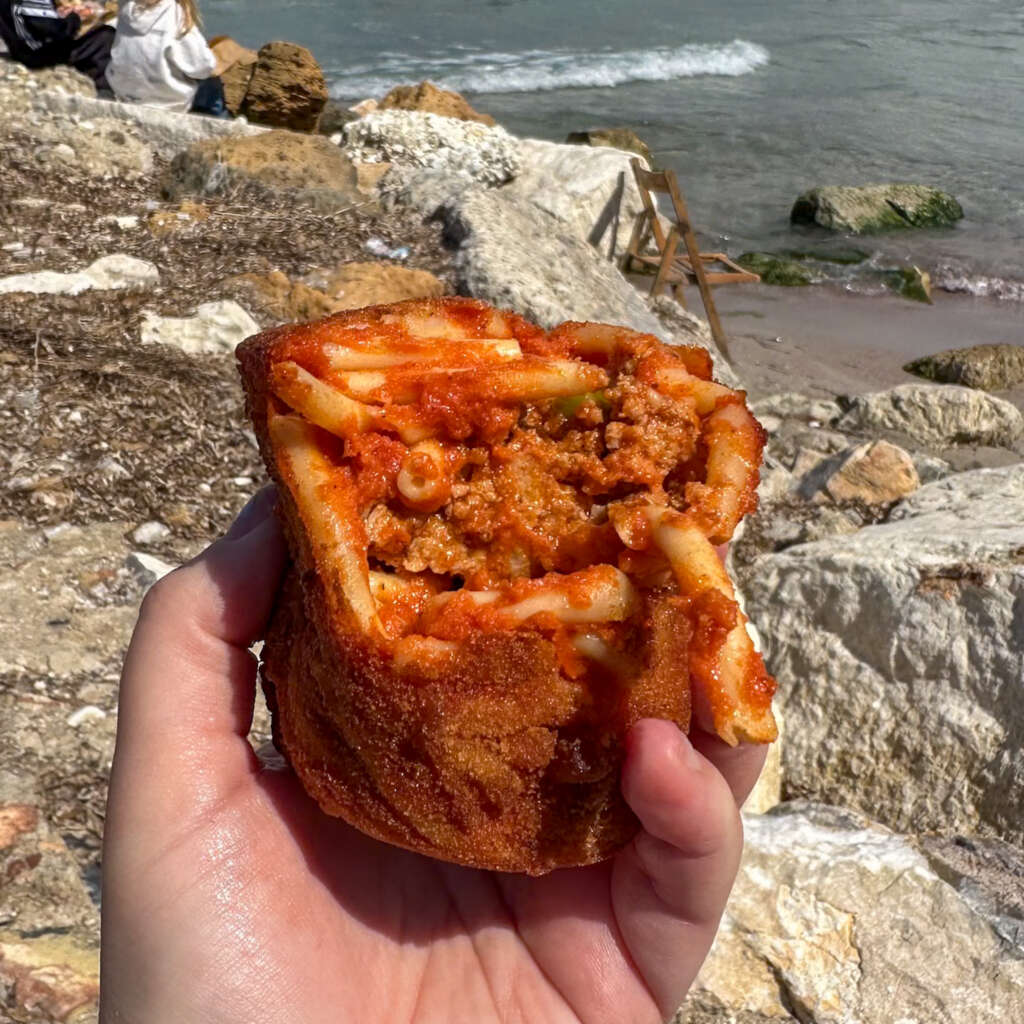
Another dish to try at Panificio Oddo Michele is timballo, a deep fried ball of saucy pasta, stuffed with meat. Yes, it’s as delicious — and messy — as it sounds. Pro-tip: go to Panificio Oddo Michele, grab a timballo and a cassatelle, and then head to the beach just up the street for a lovely little lunch by the sea.
Kebab di Tonno
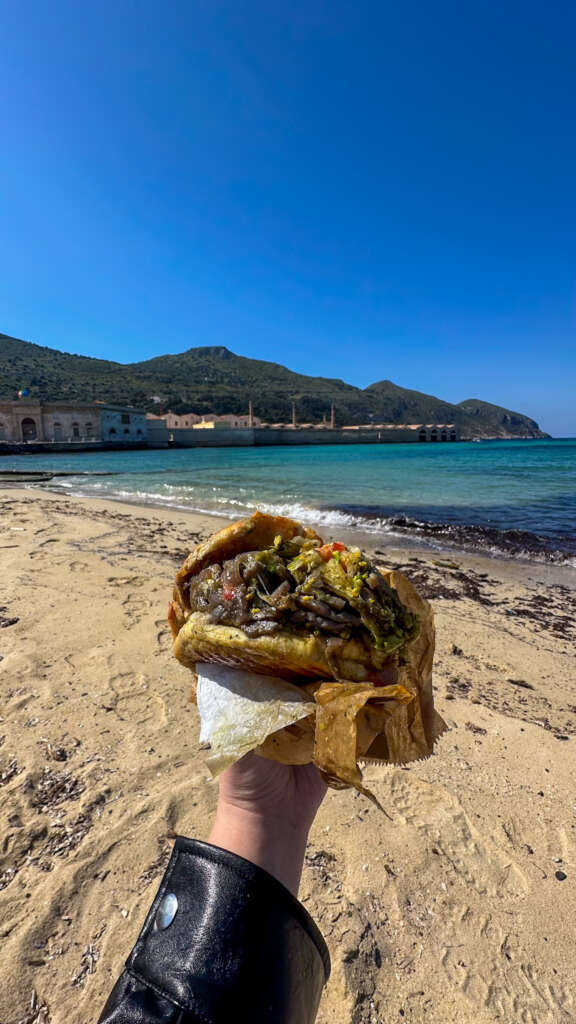
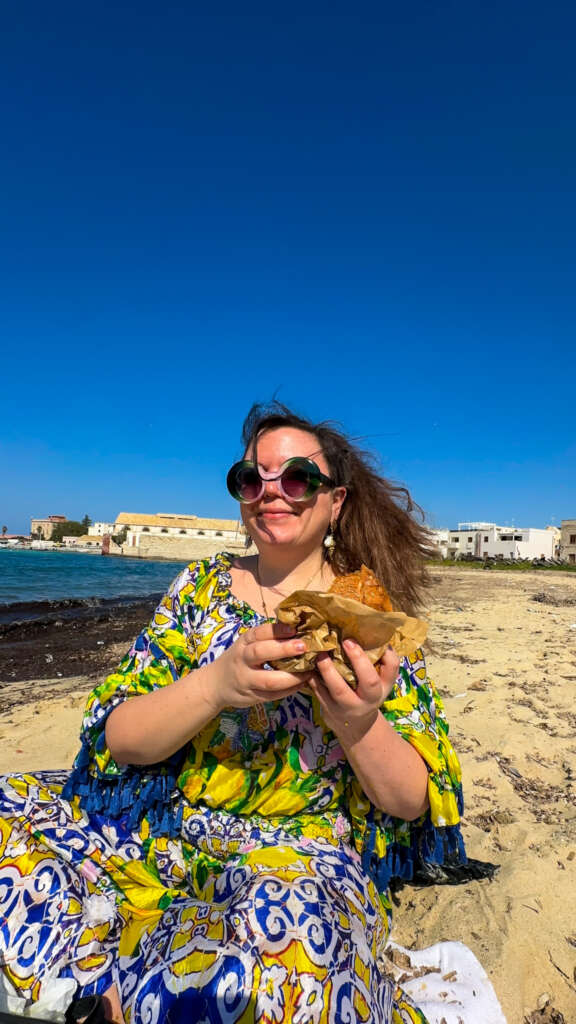
You might think a kebab di Tonno is a tuna kebab, but you’d be oh so wrong if you were talking about it in Trapani. This was a dish I tried in Favignana, and it actually means a tuna sandwich. The most common way kebab di tonno is served in this part of the world is with thick slabs of bluefin tuna, pistachio pesto, and agrodolce onions sandwiched between buns. It sounds strange but it somehow works.
Salame di Tonno
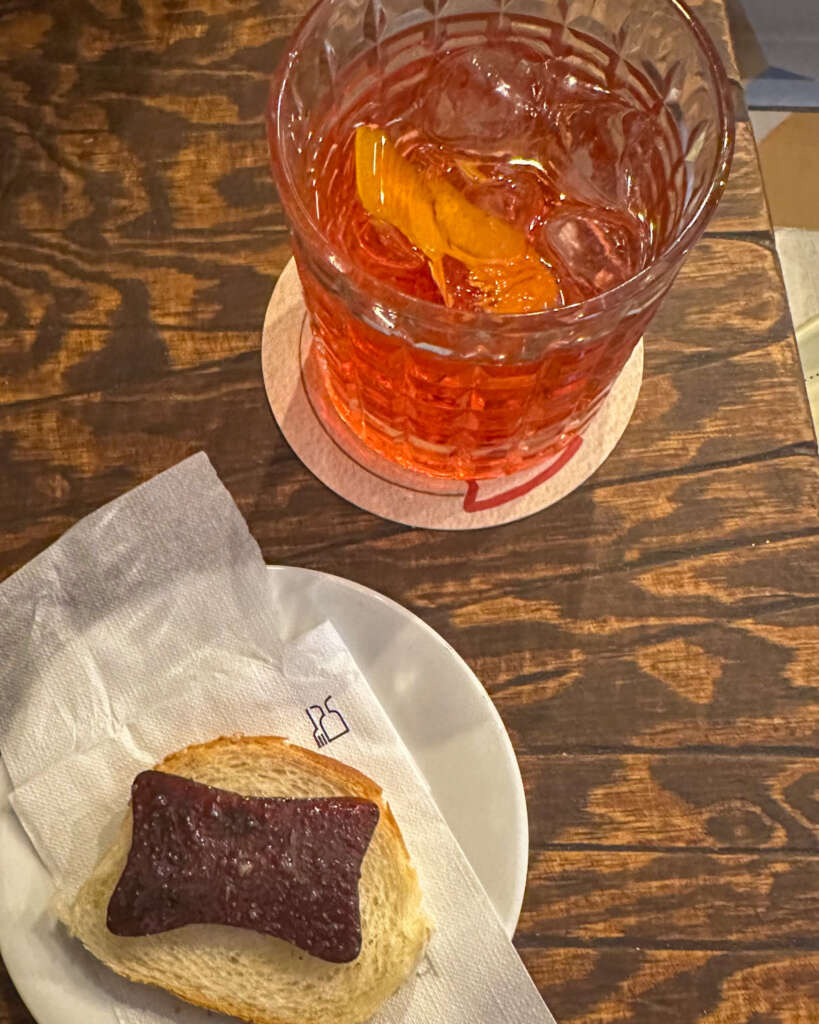
After one month in Sicily, I was starting to go a little stir-crazy from working inside my Airbnb all month. In Italy, it’s not the norm to sit at a cafe with your laptop out, but I had to break the rules ever so slightly for the sake of personal sanity. I walked to Focacceria & Mix Bar Le Bugiarde and set up shop. At some point, I ordered a negroni, and the owner encouraged me to try salame di tonno, or cured tuna salami. She promised the salty tuna would go great with the bitter negroni, and she was correct. My only regret was not trying it sooner, but when I headed to the grocery store later that evening, I saw a whole section dedicated to salame di tonno. The employees at Le Bugiarde told me that it was the norm for their families to each make their own variation of tuna salami growing up.
Couscous Trapanese
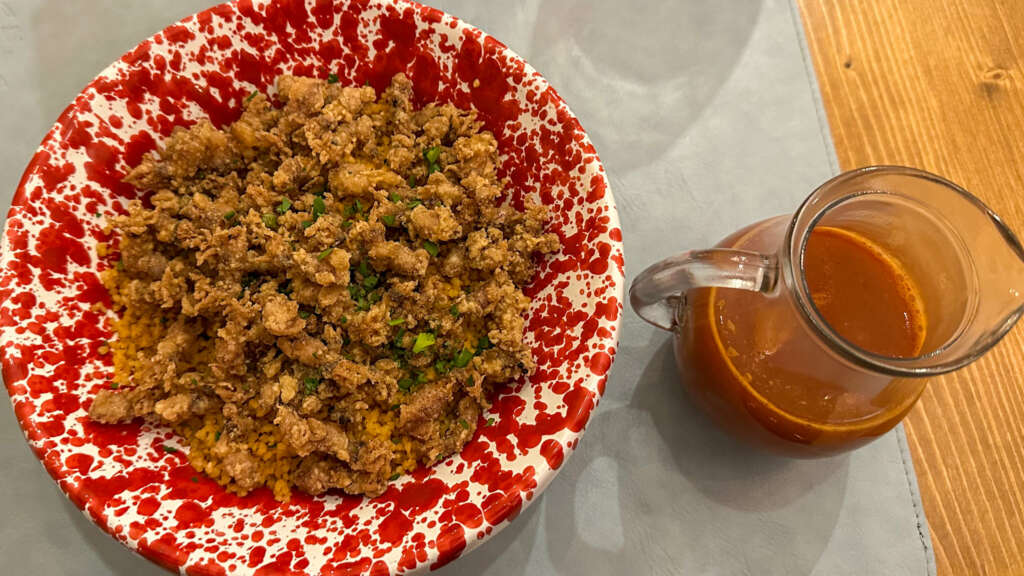
There’s plenty of Arab influence in Sicilian cuisine since Arab settlers were present in the island in the 9th century. That’s why you’ll see plenty of saffron in Sicilian dishes, but one of the most prime examples of Sicily’s complex past is in couscous Trapanese, or cuscusu. This dish is comfort in a bowl: it’s a good portion of couscous mixed with fried seafood, served alongside a rich tomato paste and seafood stock meant to be poured over the top. I didn’t see it on. a single menu in Palermo but it was easy to find in Trapani, where it originates, often for less than 10 euros.
Cefalù
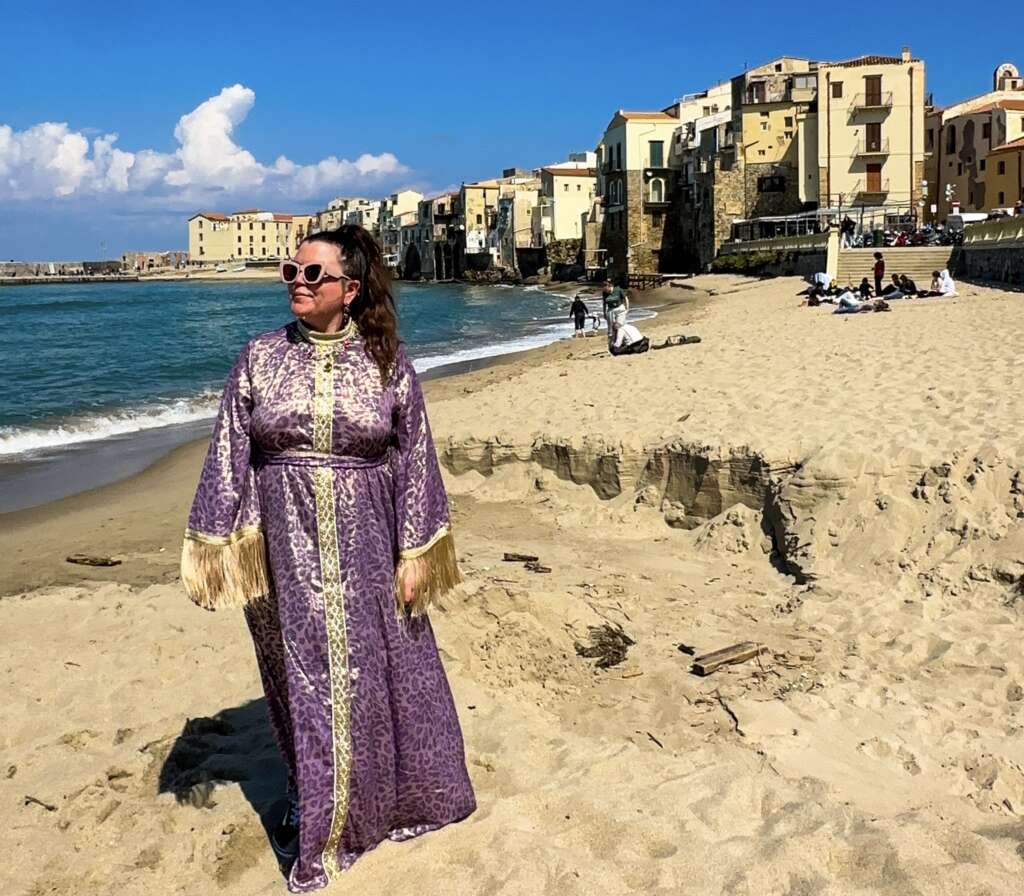
Cefalù is Palermo’s most popular beach day trip. Located less than an hour outside of the city, the calmness of Cefalù is lightyears away from the chaos of the capital. Cefalù is easy to get to via public train, but a booking a day trip through GetYourGuide is also a great option. Regardless of how you get there, here’s what to eat when in town.
Book an aperitif and snorkeling tour with food and drink in Cefalù here.
Nebrodi Sandwich
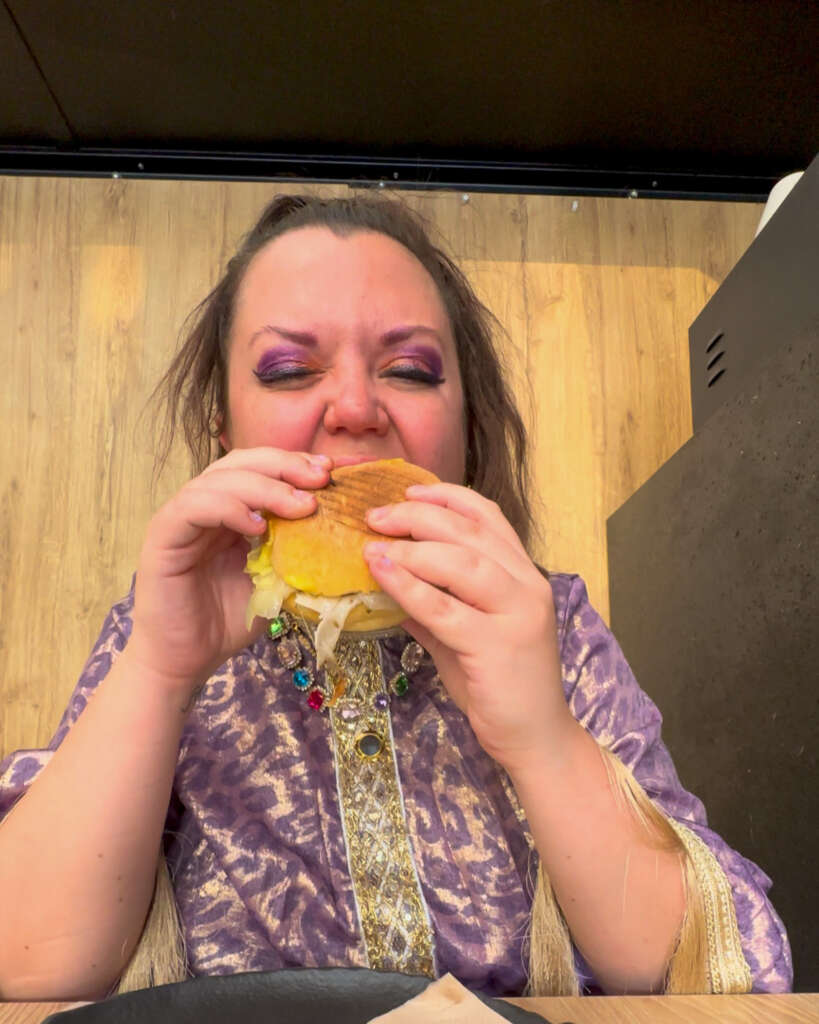
Nebrodi is a special type of black Sicilian pig that, as the name suggests, comes from the Nebrodi Mountains. These pigs eat a lot of nuts and berries and have a high marbled fat to meat ratio. Their meat is darker in appearance than typical pork, and at Foodda Cefalù, you can try a nebrodi sandwich with some veggies and cheese in a casual setting.
Brioche con granita
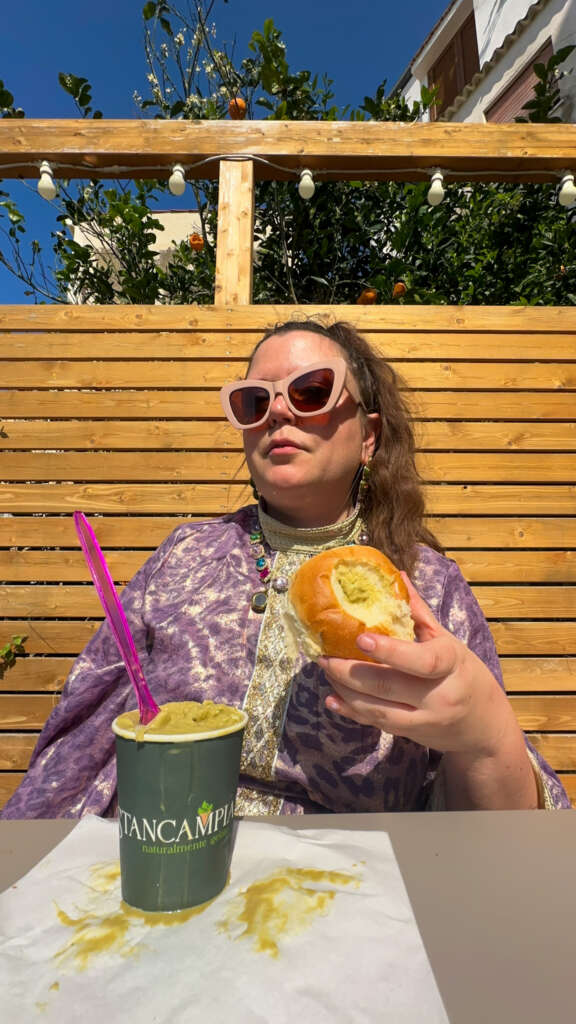
You didn’t really visit Sicily — whether you were there for a month or a day — if you didn’t start at least. one morning with brioche con granita. Granita is the icy, yet somehow still creamy, frozen dessert of the island, like gelato’s dairy-free cousin. Common flavors include almond, pistachio, coffee, and various fruits like strawberry and raspberry. The most typical way to eat this is with brioche, where, you rip the top of the brioche off and use it as a vessel to scoop up some sweet granita. I tried the pistachio version from Stancampiano Gelateria in Cefalù which was run by the nicest man, so between his hospitality and the sweet treat itseld, I’d highly recommend you do the same!
Caffé al pistacchio and cornetto al pistacchio
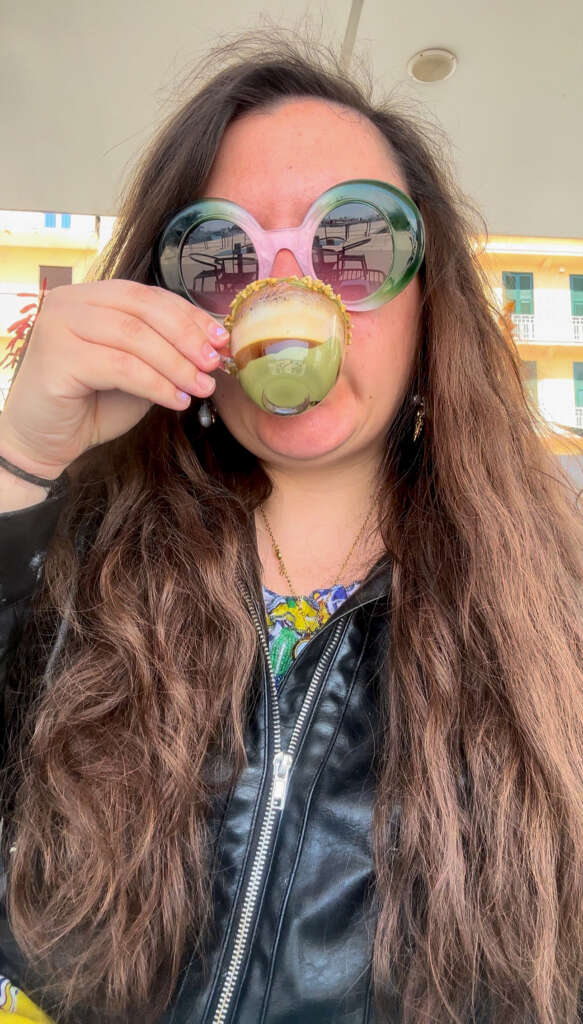
Last, but certainly not least is what should be eaten early in the morning — a cafe al pistacchio with a cornetto al pistacchio, the breakfast of champs! Sicilians, like the rest of Italy, love to start their day on a sweet note, and nothing screams breakfast in Sicily as loud as a pistachio feast. Cafe al pistacchio is a cup lined with pistachio butter, topped with espresso, and finished with steamed milk, often rimmed in a glass of more pistachio butter and actual crushed pistachios. While I am much more of a caffe doppio kind of gal, I did have a caffé al pistacchio a few mornings there, and I enjoyed them so. much that I brought home a jar of pistachio butter to recreate the scene.
Cornetto al pistacchio is simply a croissant filled with pistachio cream. So, basically? It’s nutty, buttery heaven, and a slow morning with one of these will be a sweet memory that’s yours for the keeping.
DISCLAIMER: I might make a small commission from some of the links throughout this article, but the price is the same for you. This helps keep my business running so I can continue to provide free travel tips!
