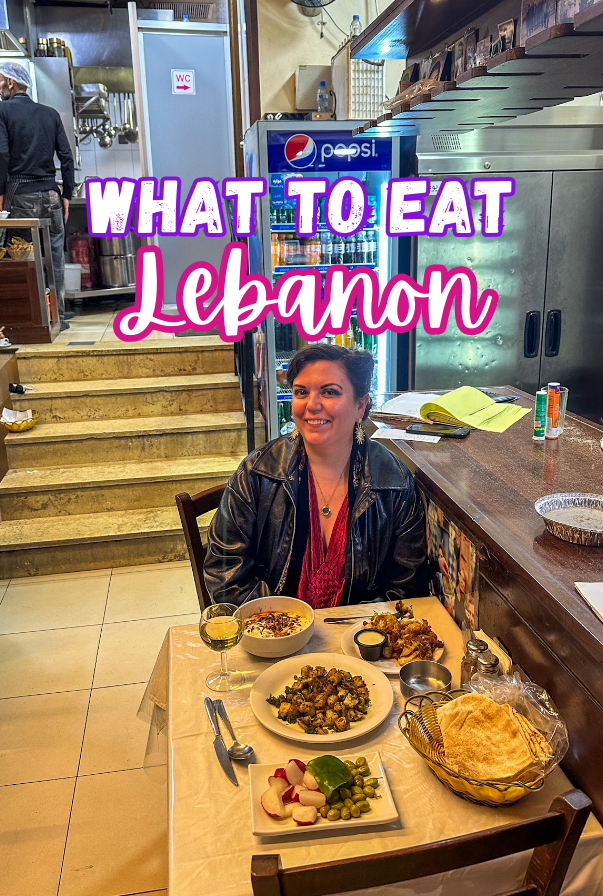
I’ve eaten my way on a budget through food-centric cities like Bologna, have truffle hunted with pups in northern Italy, and have had açai bowls in Brazil that have ruined fruit for me everywhere elsewhere. One could easily say I like eating when I travel more than I actually like the travel part of travel.
Yet out of everywhere I’ve been, nowhere quite holds a candle to eating Lebanese food in Lebanon. Well, eating in Italy is always a treat, but Lebanon’s culinary scene is special. There’s less of a universal knowledge on just how diverse and f*cking delicious Lebanese food is. Forward in fresh veggies, tangy with pomegranates and vinegars, and with one of the most vibrant street food scenes in the world in Beirut, there’s no shortage of seriously good eats in Lebanon.
While there, I made a checklist of all of the dishes I want to try. I unfortunately did not get through all of them, but sharing is caring, so without further ado, here’s everything I ate (or tried to eat) during my week in Lebanon.
Did you know? Lebanon is home to plenty of wineries! For a great day of eating and drinking, book a winery tour.
Fatteh
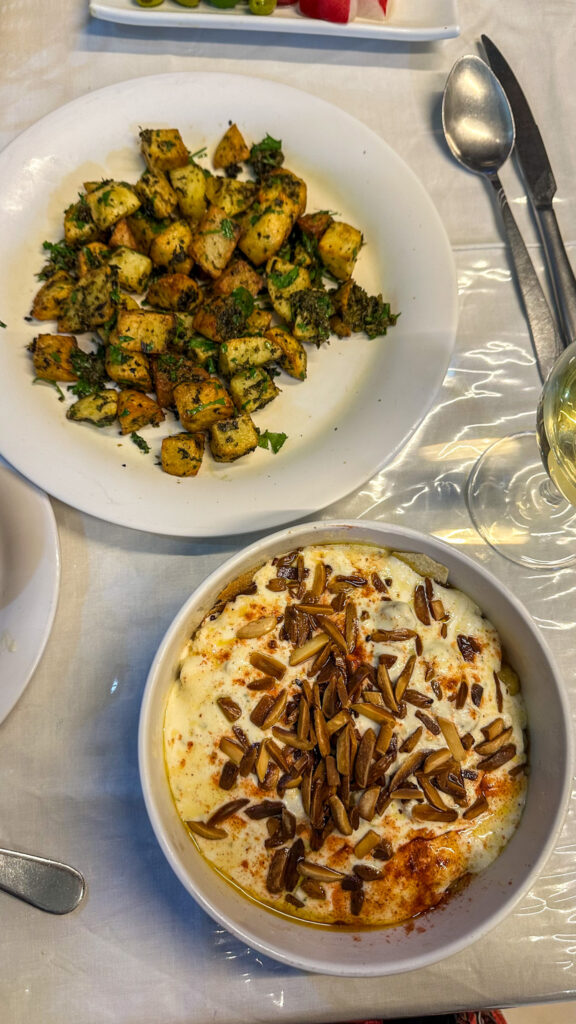
I loved everything I ate in Lebanon, but the one dish that truly altered my brain chemistry was Fatteh. What I lovingly refer to as a “bowl of slop,” fatteh is a layered dish, with pita on the bottom, topped with yogurt, chickpeas, slivered toasted almonds, and a hefty drizzle of olive oil. It’s tangy, it’s savory, it’s filling, and it’s incredible, especially if you try it from Le Chef in Beirut.
Batata Harra
Simply a dish of roasted or fried potatoes tossed in a spicy seasoning, batata harra is a must-order side dish. Sometimes they come topped with a good heap of fresh herbs (a commonality in Lebanese cuisine), but overall, herbs or not, with spicy potatoes you can’t go wrong.
Fattoush
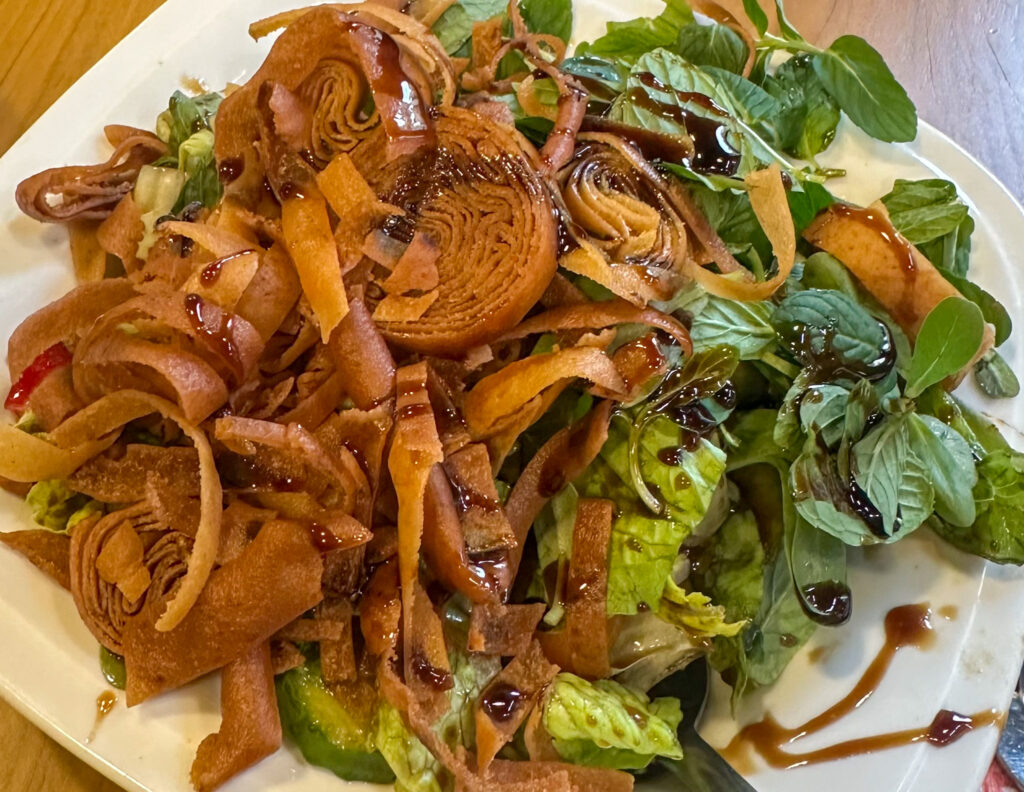
Another dish that lives in my head rent-free from my week in Lebanon is fattoush. Will I ever eat salad any other way ever again? To be honest, probably not. Fattoush is made of bitter greens, full leafy herbs (mint is key here), pomegranate, and topped with a good heap of fried Lebanese bread. Fattoush is tossed in a pomegranate molasses dressing, giving it an addictive tang. I had fattoush several times during my week in Lebanon, and many times it also had thinly sliced radishes, or cucumbers or tomatoes.
Shawarma
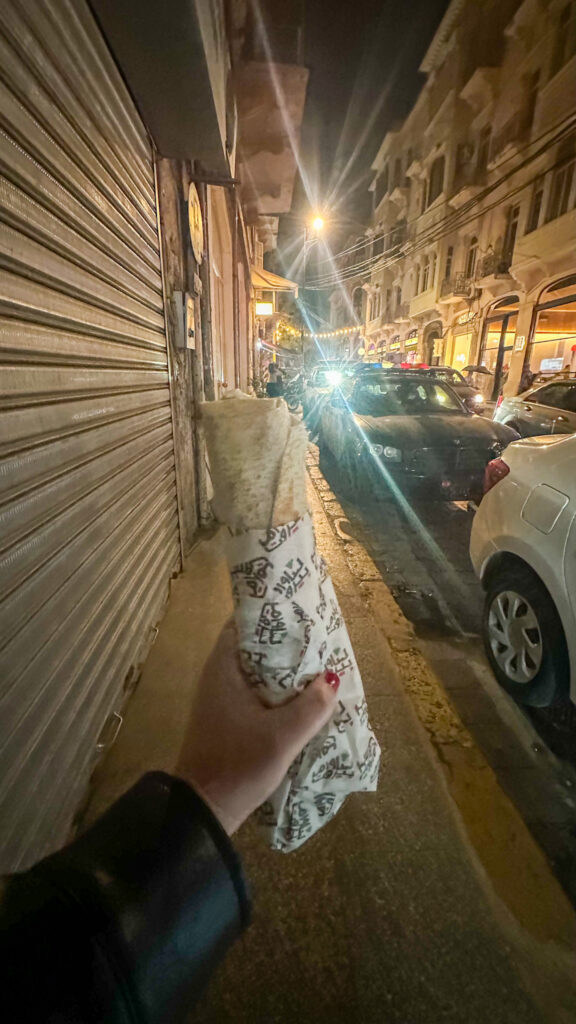
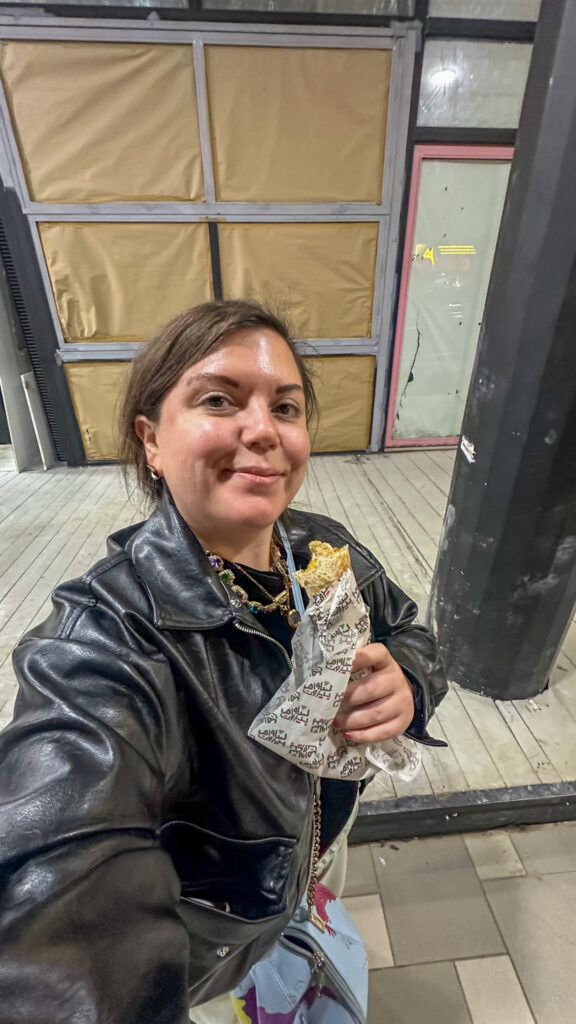
You simply did not go to Lebanon if you did not eat at least one shawarma. I ate so much shawarma during my week in the country for good reason. Giant rotating spits of meat are visible in windows in various restaurants around the country, so follow the decadent smell and grab yourself a shawarma. You can get one with either chicken, beef, or lamb, and I preferred the chicken each and every time. It’s thinly shaved off of the spit and stuffed into Lebanese bread, with typical toppings and fillings including toum (garlic spread) and pickles. Simple, fast, cheap, and stupidly delicious.
Kibbeh
Known as the national dish of Lebanon, kibbeh is a ground beef or lamb dish that can be served a variety of ways. There is kibbeh in its raw form, which is mixed with bulgur wheat and shaped into ball form, typically served with toasted pine nuts. There’s also the deep fried form, which is where the meat is in the middle of a bulgur wheat dough. Both are incredible, and I’d recommend trying each variation while in the country. And pro-tip, the fried version is available at the lounge in the Beirut airport!
Manakeesh
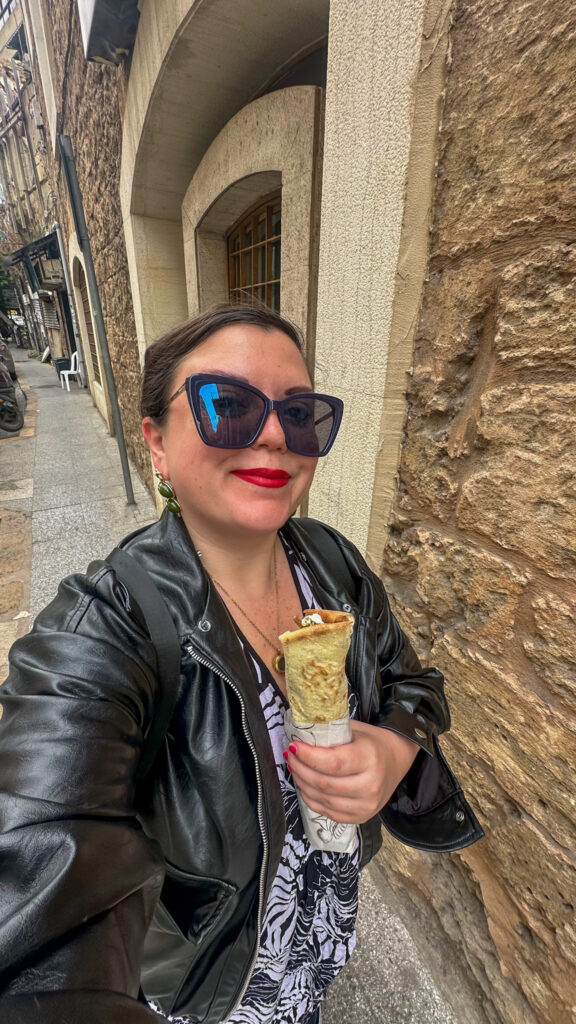
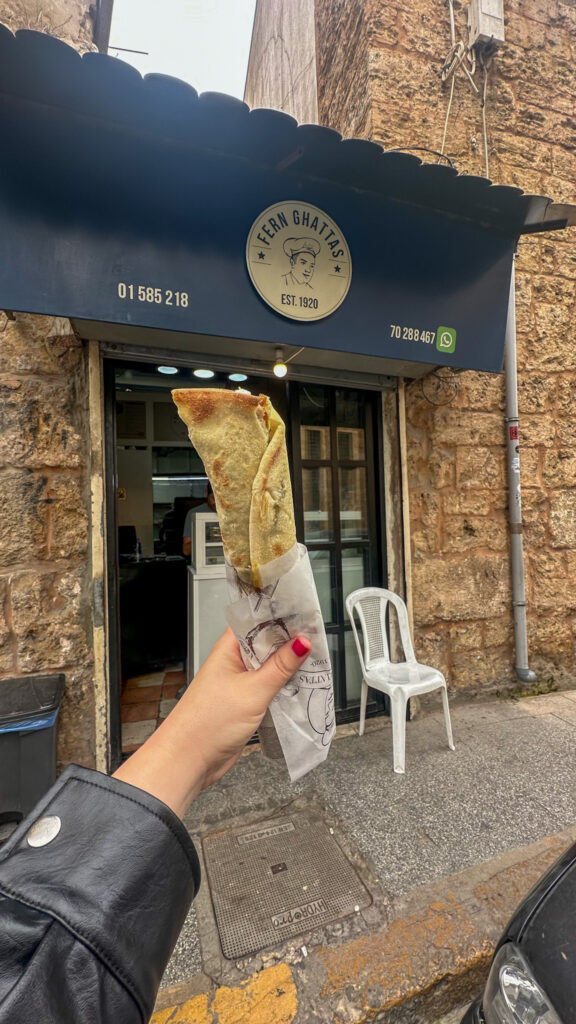
One of my most surreal moments of eating manakeesh on the streets of Beirut was the first time I had this very specific Lebanese breakfast was two years prior in New York City from a restaurant called Manousheh. This could also explain why I thought it was called manousheh (which, it is, along with manakish, mankousheh, along with several other names!). Whichever name you use, the dish is the same: a Lebanese flatbread topped with za’atar, akkawi (a cheese similar to halloumi) and olive oil, but at many spots serving manakeesh, you can choose fillings and toppings of your liking. For example, I got a rolled version stuffed with labneh and za’atar which was incredible, and the woman in line in front of me got hers stuffed with labneh and ground lamb.
Hummus
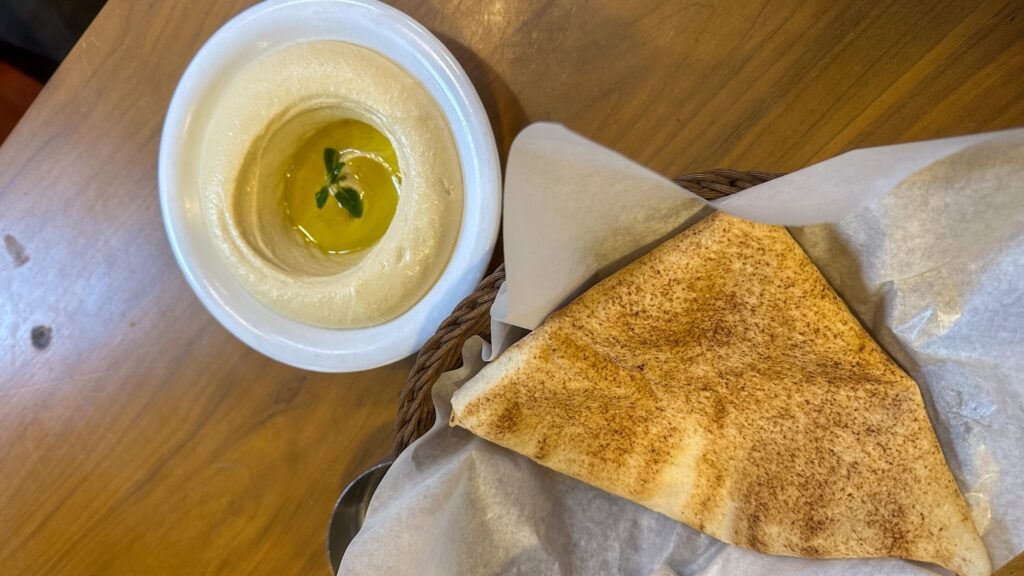
Out of everything on this list, it would be safe to assume you at least have heard of hummus. With many theories on where hummus can pinpoint its origins too, at the very least, we know it was in the Levant (most will say it’s from Syria or Egypt, but it will likely forever be up for debate). Regardless of its origins, you will see the creamy chickpea dip on every menu in Lebanon. It’s simple and it’s nearly impossible to get wrong, so order a bowl with some freshly baked hot Lebanese bread for a real treat.
Toum
The only dip I can get down with more than hummus is toum. Oh, my beloved toum. Could I please bathe in toum, be buried in toum, and add it to every dish for the rest of my life? That would be fabulous. Toum has the consistency of mayo, but it is simply blended garlic with a little bit of olive oil, salt, and sometimes lemon. It is literally creamed garlic. How could you not love this stuff? It is the greatest food invention in the history of food inventions. What can I say? I seriously love toum, especially when slathered on a shawarma.
Arayes
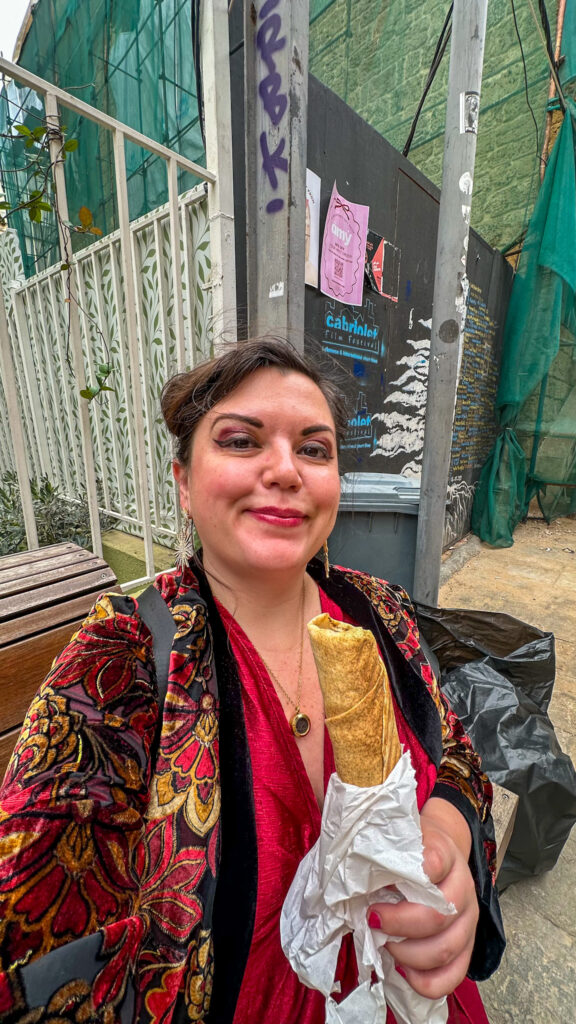
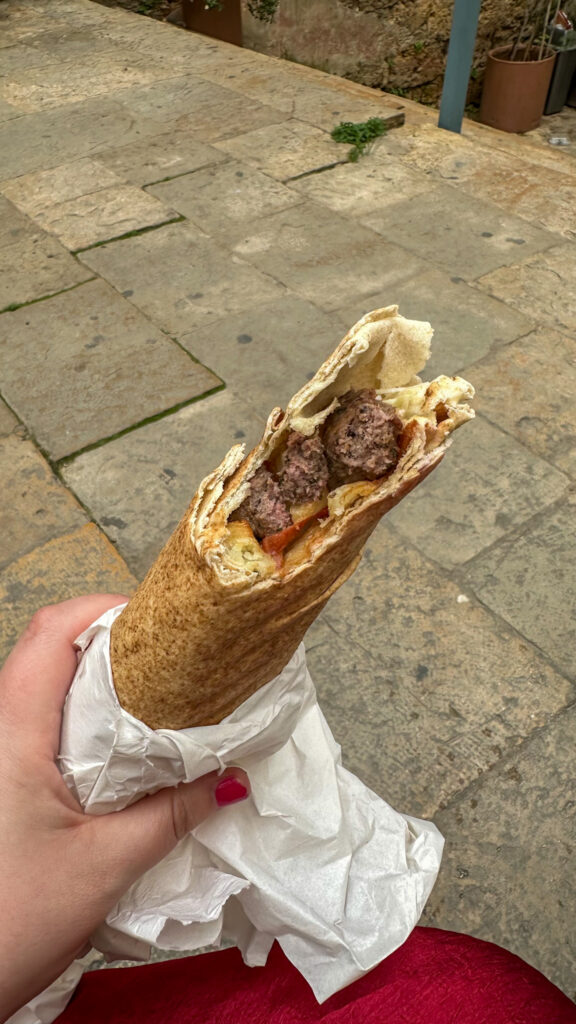
Another sandwich on the go in Lebanon is arayes. Though when I googled photos of arayes it looked more like a ground beef-stuffed pita, when I ordered one, it came in more of a wrap. Regardless of its variations, arayes is a sandwich full of flavorfully spiced ground beef, potatoes, and some veg. It’s simple and cheap, and, you guessed it, it’s even better with toum!
Sfiha
Out of all of the things on my list that i wanted to try when in Lebanon, the only one I never got around to was sfiha. It’s simply a flatbread “cookie” filled with minced meat (usually lamb), onions, tomatoes, and spices. My sole reason for never trying it was I never actually saw sfiha on any menus, however, I’m sure had I looked a little harder, it would’ve been right there since it is a commonly eaten dish in Lebanon.
DISCLAIMER: I might make a small commission from some of the links throughout this article, but the price is the same for you. This helps keep my business running so I can continue to provide free travel tips!