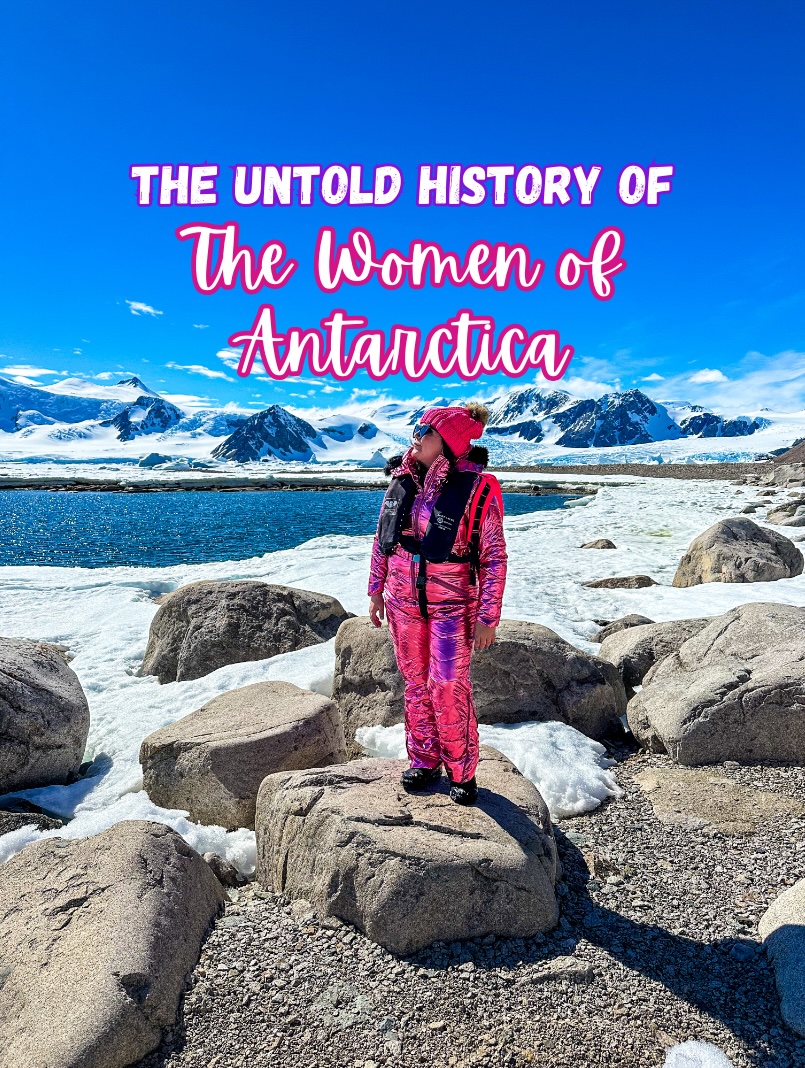
“Good morning, we are on unexplored uncharted waters, looking for a place to adventure. This is an adventure for all of us as we go where we’ve never been before.”
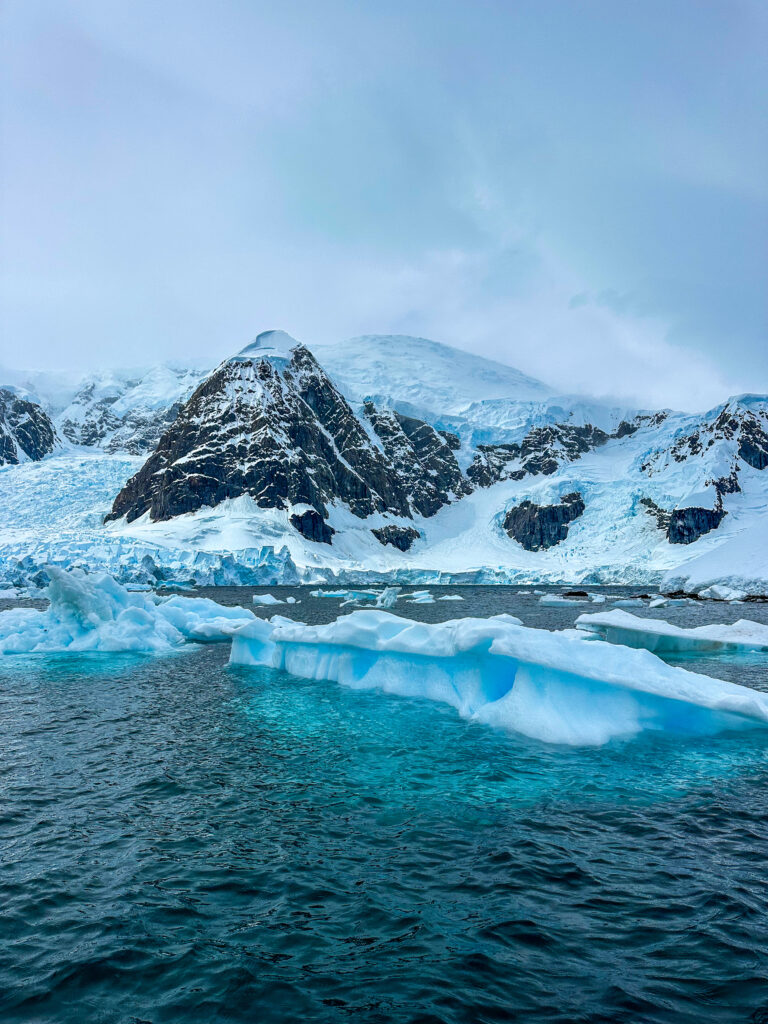
That was my wakeup call over the intercom by Michael Jackson on my second official day in Antarctica on my trip with National Geographic-Lindblad Expeditions. We were so far south that we had managed to reach a part of the continent that had never been touched by a tourist passenger ship before.
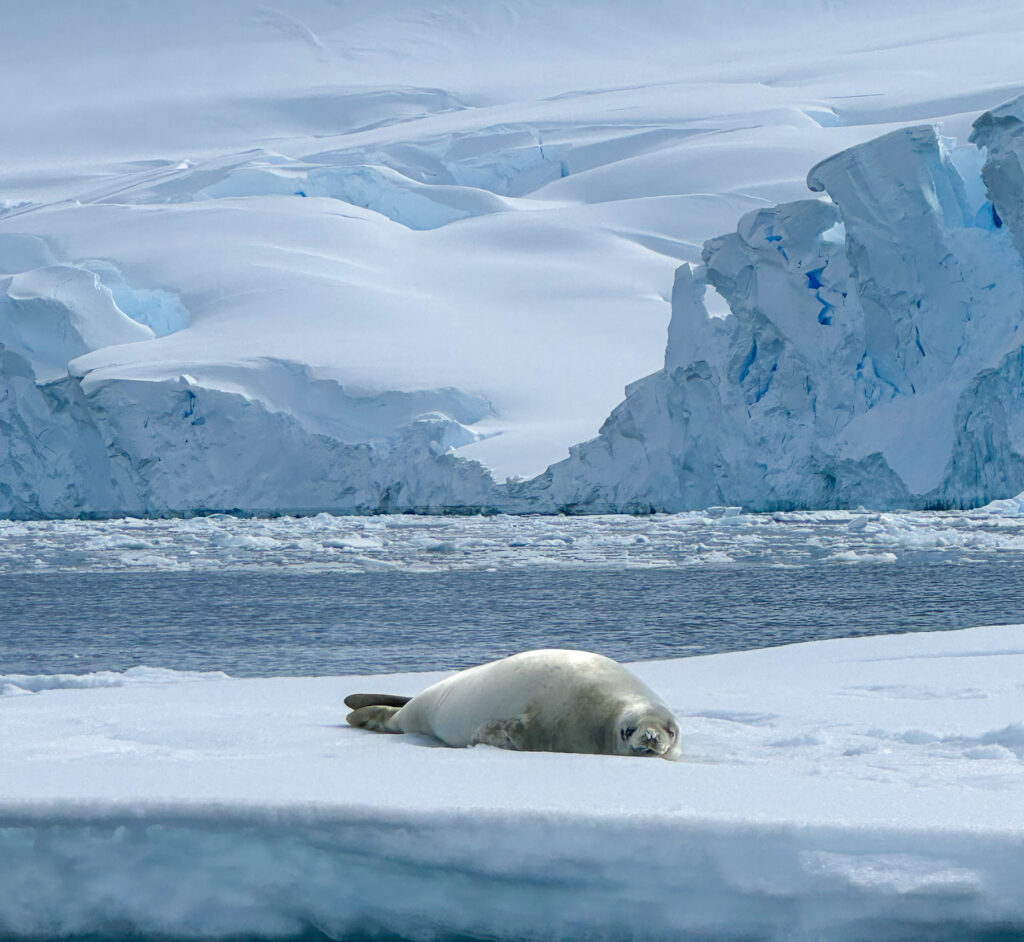
I looked out my cabin and felt the silence of the ship. We were just told by professionals of the utmost standard that they had no idea where we were… in Antarctica. Ice was lightly crushed as the National Geographic Resolution powered through, I sipped my coffee, I saw a seal out in the distance, I used my VPN to see just how far south we were.
Marguerite Bay.
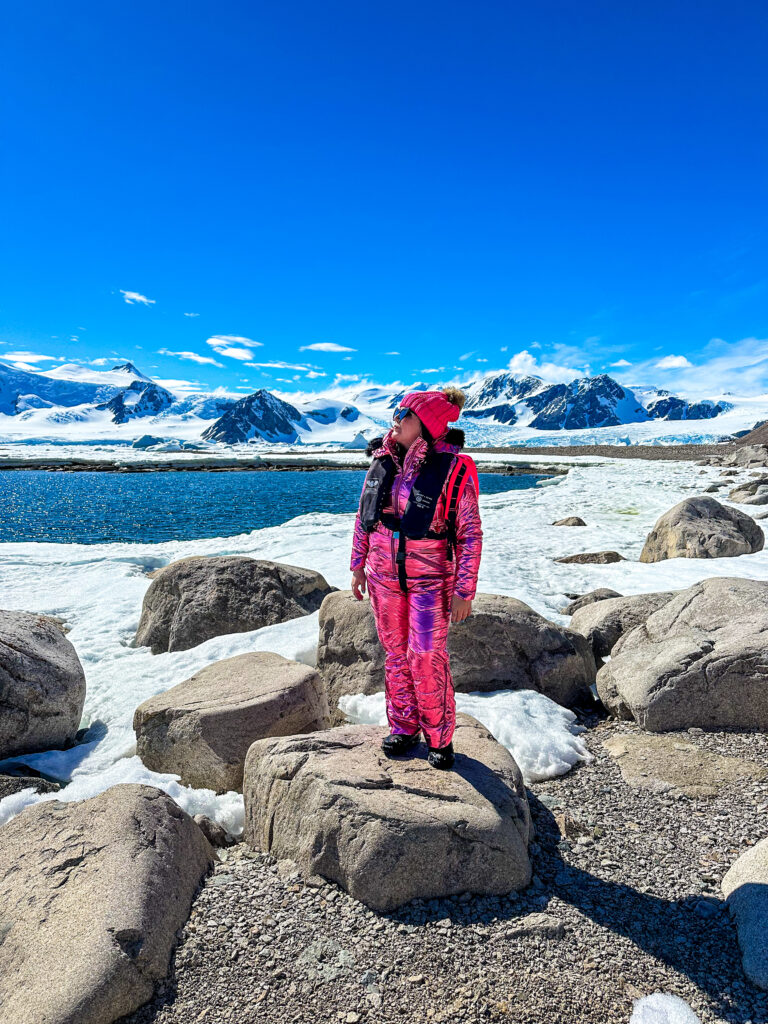
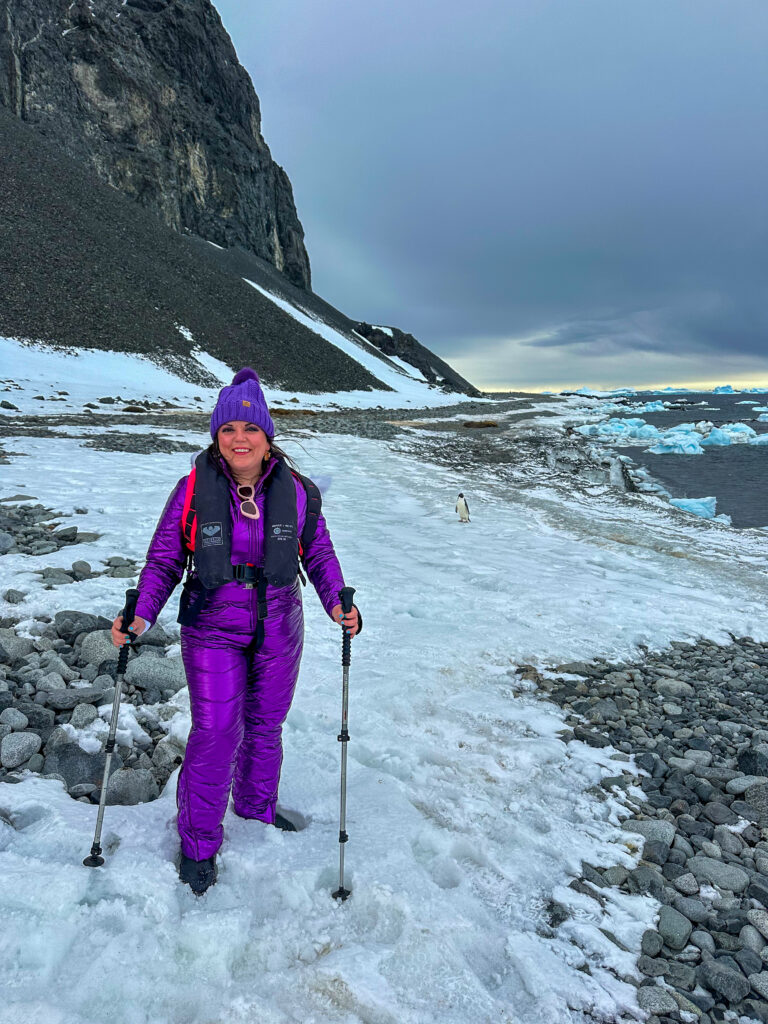
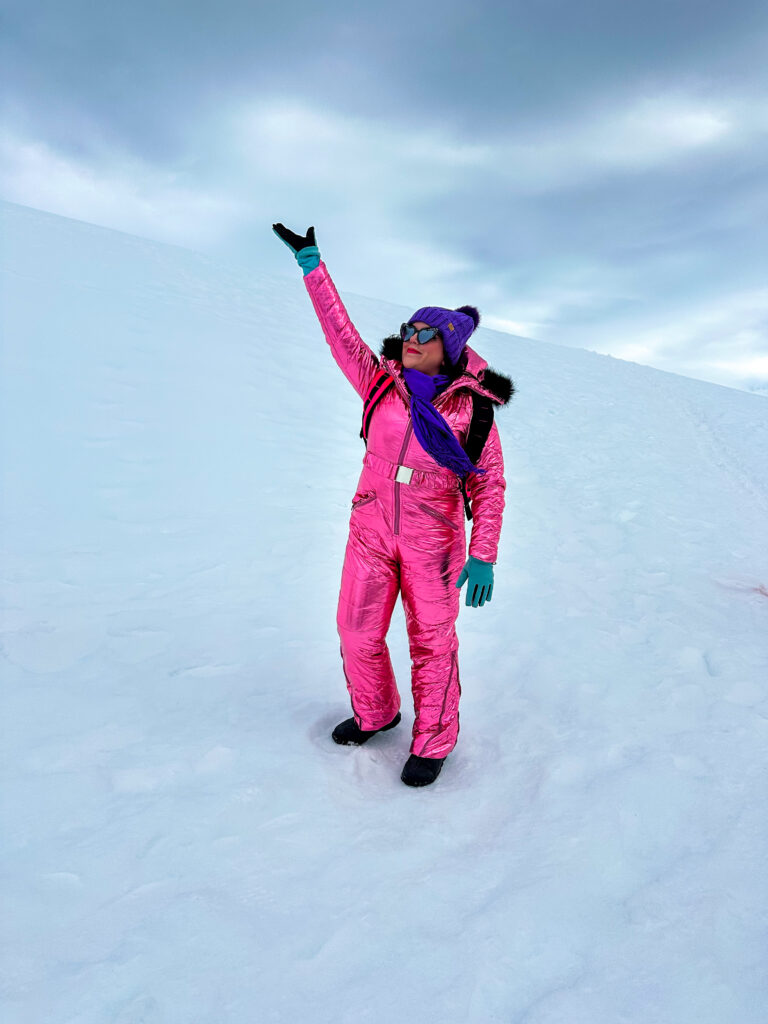
As we disembarked onto land, it became clear that the area was untouched. The snow went above my knees as I stepped through the white slush. As I donned my hot pink metallic snowsuit with my studded heart sunglasses, I couldn’t help but think of the women who came before me. Luckily I wasn’t the only one with that thought.
Later that day, Jennifer Kingsley, a journalist, National Geographic Explorer and cultural specialist, held a presentation on the sixth floor of the ship about women’s history in Antarctica. It was here that I learned my presence, along with all of the other women in the room, would have been banned had I just tried to make this journey even half a century earlier.
Kingsley later tells me she drew inspiration from Kim Nesbitt, a biologist and expedition guide, who gives a similar presentation when she embarks on expeditions to Antarctica.
“There are some things women don’t do. They don’t become pope or president or go down to the Antarctic.” -Harry Darlington, 1947
Kim Nesbitt, biologist and expedition guide, reads this quote as she begins her presentation on Women’s History in Antarctica onboard the National Geographic Endurance. Harry Darlington is the husband of Jennie Darlington, one of the first women to overwinter on Antarctica alongside Jackie Ronne. At the time, women were technically banned from the continent, but Darlington and Ronne were permitted because they accompanied their husbands.
Search “Antarctica history” in any library or online search engine, and you’ll read about Ernest Shackleton, Mikhail Lazarev and Nathaniel Palmer. These men undoubtedly contributed to the continent’s history.
What about the women?
It wasn’t until 1968 that Argentina began sending women scientists to Antarctica. Women were banned from the U.S. Antarctic Research Program until 1969. The list goes on, but prior to that, outside of being wives and only then on rare occasions, women have historically been forbidden to travel to or work on Antarctica.
Some went anyway.
The first hint of women making their way to Antarctica goes far beyond when Fabian Gottlieb von Bellingshausen “discovered” the continent in 1820. Evidence dating back to 650 AD links the Māori people as the first to visit the Antarctic region. The first recorded girl to trek the Antarctic waters, however, is teenager Louise Senguin in 1773. Since she was not technically allowed to be there, she dressed as a boy to disguise herself.
Clothing continued to play a role. Over 100 years later, three women wrote to Shackleton, requesting to join an expedition.
“If our feminine garb is inconvenient, we should just love to don masculine attire. We have been reading all books and articles that have been written on dangerous expeditions by brave men to the Polar regions, and we do not see why men should have the glory, and women none, especially when there are women just as brave and capable as there are men,” they wrote.
Shackleton denied their request.
It wasn’t until 1935, when Caroline Mikkelsen trekked to Antarctica, accompanied by her husband, that a woman finally stepped foot on the Antarctic mainland. However, in 1985, the Chilean Antarctic Institution found bone remnants on the South Shetland Islands. These remains are believed to have belonged to an Indigenous Chilean woman, dating back as far as 1819, suggesting Mikkelsen was perhaps not the first.
While women have made serious strides in Antarctica, they’re still subject to the same gendered issues they face globally. The U.S. Antarctic Program (USAP) has a policy for overwinters in Antarctica that “All wintering females of child-bearing age will be screened for pregnancy.” Any woman who becomes pregnant during her overwinter will be deemed “Not Physically Qualified” (NQP). Pregnancy, understandably, is a medical concern. However, no evidence suggests that men who overwinter need to practice any prevention from impregnating women.
A 2022 report by the U.S. National Science Foundation exposed harrowing statistics of sexual assault and harrassment on American bases in Antarctica, with 95% of focus group participants saying they knew someone who had experienced sexual assault or harrasment. As one survivor told researchers, “[Sexual assault and sexual harassment] are a fact of life [here], just like the fact that Antarctica is cold and the wind blows.”
Despite the challenges, past and present, women continue to make history on the seventh continent.
A prime example is Rachael Zoe Miller, National Geographic Explorer and founder of Rozalia Project. Miller has been collecting samples of Antarctic air and waters to test for microplastics and manmade microfibers since 2023. If she goes one more time and collects just four more samples, Rachael’s would be one of the biggest data sets of air and water from Antarctica in history.
Karson Winslow, a staff naturalist with National Geographic-Lindblad Expeditions, is a National Geographic Certified Field Educator, informing the next generation of adventurers through the company’s Global Explorers Program. Beyond inspiring the youth, Winslow, a sailor, has plans to make further waves in the Antarctic waters.
“I would like to sail to Antarctica,” Winslow says. “I am hoping to accomplish this with the Tall Ship Europa that sails from Ushuaia to the Antarctic Peninsula.”
Antarctic explorer and filmmaker, Ariel Waldman, spent two months in the Dry Valleys of Antarctica filming her self-made documentary “Antarctica Unearthed,” showcasing microscopic life in Antarctica. The documentary is expected to debut on PBS in 2026.
Nesbitt, Miller, Winslow, Waldman and Jennifer Kingsley are proving Antarctica is, and always has been, a woman’s place.
“I don’t think anyone would debate that the Polar regions have been a male-dominated environment, and that is changing,” says Kingsley. “The more different perspectives we have, the place itself comes more alive.”